
Code Monger, cyclist, sim racer and driving enthusiast.
10213 stories
·
6 followers

Elon, Elon, what a killer

1 Share

Elon Musk and his apologists are getting upset by people pointing out that his illegal destruction of USAID had resulted in the avoidable deaths of countless people in exchange for no benefits whatsoever. Always both a maximalist and a liar, he’s claiming that no deaths at all have resulted from his termination of extremely cost-effective aid programs. This is obviously false, as systematic evaluation reveals:

Elon Musk really doesn’t want you to say he’s responsible for the deaths of millions.

Earlier this week, Musk threatened to sue Rep. Ro Khanna for charging him with destroying the U.S. Agency for International Development (USAID) and putting millions of lives at risk around the world:

“There needs to be accountability for Elon Musk,” Khanna said. “You know, they’re celebrating that he created 4,400 millionaires [with his SpaceX IPO], but they don’t talk about the 4.5 million children around the world who he possibly sentenced to death by dismantling USAID.”

In response, Musk called Khanna a liar, threatened to sue, and said he should be in prison.

But Khanna is making a perfectly reasonable claim here. In that quote, he is (carefully) citing a peer-reviewed study that estimated the effects of dismantling USAID. It found that Musk’s Department of Government Efficiency (DOGE) will result in 14 million deaths overall by 2030, of which 4.5 million will be children under the age of 5.

This is probably a high-end estimate, but even lower end projections with different methodologies sit between 670,000 and 1.6 million annual deaths compared to a fiscal year 2023 baseline.

In other words, the toll from USAID cuts seems to be at best around two-thirds of a million people annually1; that’s about as many people as were killed during the Civil War. At worst, Musk is tied to the deaths of 14 million.

If DOGE had managed to cut tens of billions of dollars from the federal budget, Musk and his defenders would certainly have taken credit. It’s bizarre then to disclaim responsibility for the tragic consequences of the cuts they did make.

“But where are the names? Name the names!” Well, here you go [gift link]:

“There is not even a single dead child!” Musk protested on social media. I noted that I had met many families of children who had died — and that’s when he concluded that I was lying.

Musk’s assertion that not a single child died is absurd, yet he doubled down: “They cannot cite a single name of someone who died out of the ‘millions’ they falsely claim have died. Not a single name!”

On X, I began to give Musk some names. Let me elaborate:

Jibia was a 10-year-old girl, ranking third out of 58 students in her fourth-grade class in Rwamwanja, Uganda. Aid cuts meant that the local clinic ran out of $2 bed nets to protect from mosquitoes, as well as anti-malaria medicines. Jibia died of malaria last July, her mother told me outside the family home. Medical records confirmed that, and health workers told me that she would have been fine without the aid cuts: Replacing her tattered bed net with a new one could have prevented malaria, and in any case drugs would have helped her to recover promptly.

Yamah Freeman hemorrhaged while pregnant with her third child in her village in Liberia. The United States had provided ambulances to the local hospital, but the aid cuts under Musk and President Trump meant that the ambulances had no fuel. The strongest young men in the village placed her on their shoulders and raced down the path toward town, shouting encouragement to her as they ran, but she bled to death along the way. Her parents and sister told me about this, and I visited her grave.

Achol Deng, 8, had been infected with H.I.V. at birth in South Sudan but had been kept alive by American-provided medicines costing just 12 cents a day. The dismantling of U.S.A.I.D. and the resulting chaos meant that she lost her caseworker and access to medicines, and soon died of an opportunistic infection, health workers told me.

I could keep going. A Boston University researcher estimated that the aid cuts have cost more than 750,000 lives worldwide. A study published in the Lancet, the British medical journal, forecast that at present rates, the aid defunding will cost 9.4 million lives by 2030.

DOGE would, in itself, suffice to make Trump one of the worst presidents in American history. And all the money in the world won’t make Elon Musk any less of a horrible person and I’m happy that it’s getting to him.

The post Elon, Elon, what a killer appeared first on Lawyers, Guns & Money.

Read the whole story
LeMadChef
3 minutes ago
reply
Denver, CO
Share this story
Delete

Dark money groups that spent $2.5M backing more moderate Democrats in statehouse primaries won in just 2 of 8 races

1 Share
The biggest loss happened in House District 6 in Denver, where state Rep. Sean Camacho lost to civil rights attorney Iris Halpern
Read the whole story
LeMadChef
11 minutes ago
reply
Denver, CO
Share this story
Delete

Melat Kiros defeats U.S. Rep. Diana DeGette in Democratic primary for Denver’s congressional seat

1 Share
Kiros, 29, ousted Colorado’s longest serving congresswoman in a rebuke to the Democratic establishment
Read the whole story
LeMadChef
11 minutes ago
reply
Denver, CO
Share this story
Delete

The US going 100% EV by 2040 would save more than 100k lives, study says

1 Share

Although climate change is the primary motivation behind electric vehicle adoption, it isn't the only consideration. Removing internal combustion engines from the road directly saves lives by reducing airborne pollutants that can cause and trigger asthma and other lung diseases.

Now, a report from the International Council on Clean Transportation has tried to quantify that effect, comparing various electrification scenarios over the next couple of decades. Currently, more than 41,800 premature deaths are attributable to air pollution from road transport, the ICCT says.

We've long known that living near a busy road is associated with worse health outcomes. Combustion products like nitrogen oxides (NOx), carbon monoxide (CO), particulates (PMs), and volatile organic compounds (VOCs) are all found around highways and busy intersections in concentrations high enough to cause health effects, and studies have repeatedly shown that living close to a major roadway is associated with increased mortality.

The ICCT worked with the FIA Foundation—yes, the road safety nonprofit is related to the same FIA that's in charge of F1 and other global motorsport—to create a model to estimate road transport emissions through to 2050. The model included light-duty vehicles (passenger cars and trucks), heavy-duty vehicles (delivery trucks, buses, tractor-trailers, etc), and two- and three-wheel vehicles. It predicted levels of NOx, black carbon and organic carbon, sulfur oxides, ammonia, CO, and VOCs.

The study then calculated the heart impacts from conditions like asthma, chronic obstructive pulmonary disease (COPD), diabetes, ischemic heart disease, lung cancer, and stroke (all linked to PM2.5 exposure and ozone exposure), as well as pediatric asthma incidence caused by NOx and NOx-attributable premature mortality in adults.

Several scenarios were then run. The primary reference scenario uses August 2025 as the baseline, with a US government that's openly hostile to the idea of clean energy. Another scenario considers what would happen if there is an ambitious effort to adopt EVs, assuming that 100 percent of all vehicles are zero-emissions by 2045, with some regions going all-EV for light vehicles by 2035 and for heavy vehicles by 2040.

Even under the baseline 2025 scenario, high-income regions like North America and Western Europe should see significant reductions in PM2.5 and NOx pollution. But in other parts of the world where incomes are lower, pollution could rise by 50 percent or more due to lax regulations and slower vehicle replacement. The ambitious scenario sees these disparities largely eliminated, with even the poorest countries seeing as much reduction in PM2.5 and NOx as the richest did in the baseline 2025 scenario.

A disproportionate amount of pollution comes from heavy-duty diesel-powered vehicles. Even though they account for only about one in 20 vehicles on the road, heavy-duty vehicles are responsible for 36 percent of transport energy consumption, 60 percent of tailpipe NOx, 55 percent of tailpipe PM2.5, and 65 percent of tailpipe SO2. Two- and three-wheelers are also rather dirty; despite representing just 4 percent of transport energy consumption, they contribute 14 percent of tailpipe PM2.5, 19 percent of tailpipe VOC, and 12 percent of tailpipe CO, according to the ICCT report.

The current health impact from transportation pollution amounted to almost 700,000 premature deaths worldwide in 2024 and nearly 250,000 new pediatric asthma cases. China saw the highest number of premature deaths, but the US was at the top of the chart for new asthma cases, with 23,100. Even under the baseline 2025 scenario, the US and other wealthy nations should see a 50 percent reduction in premature deaths and a slightly greater reduction in pediatric asthma cases. Ambitious EV adoption still has the potential to help prevent 108,400 premature deaths and 42,100 new pediatric asthma cases in the US by 2050.

While there is a growing number of zero-emissions heavy-duty vehicles, including both battery EVs and hydrogen fuel cell EVs, adoption lags behind light-duty passenger vehicles. Zero-emissions heavy truck adoption reached 4 percent in the second half of 2025, with a cumulative total by December last year of 72,308 nationwide. While that doesn't sound like much, it's almost 20,000 more trucks than at the end of 2024, which is promising growth, even in the absence of tax credits or corporate environmental stewardship goals.

“Zero-emission freight makes economic sense across a growing number of routes, especially where diesel health impacts are greatest," said Ray Minjares, program director at the International Council on Clean Transportation. "With smart policies that further drive down the cost and drive up the sales of electric freight vehicles, US states will deliver economic growth, energy savings and a pollution-free future."

Read full article

Comments


Read the whole story
LeMadChef
12 minutes ago
reply
Denver, CO
Share this story
Delete

Want to predict wildfires? The key may be underneath Colorado, Western states

1 Share
Recent studies show soil moisture may have a strong link to where Western forest fires spark and spread.
Read the whole story
LeMadChef
17 minutes ago
reply
Denver, CO
Share this story
Delete

US's climate.gov site, taken down by Trump, relaunched by nonprofit

1 Share

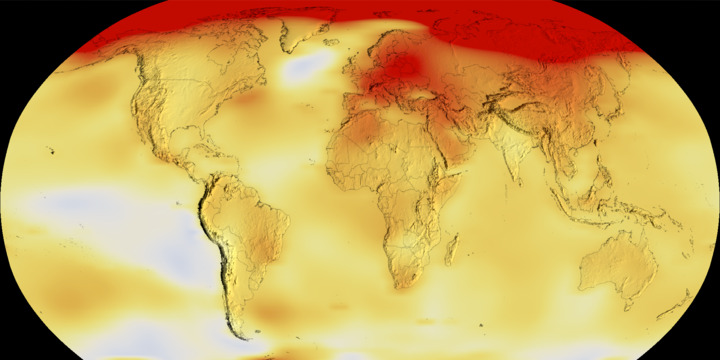
Over decades, researchers in the US government and programs it sponsored built up a tremendous number of climate resources, from comprehensive analyses to massive datasets to basic explainers meant to inform the public. And people within the government built the climate.gov website to make it all accessible. But if you try to navigate there today, you get redirected to the climate page of the National Oceanic and Atmospheric Administration, and are greeted with the following message:

In compliance with Executive Order 14303 (“Restoring Gold Standard Science”), the White House Office of Science and Technology Policy’s June 23, 2025 Memorandum (“Agency Guidance for Implementing Gold Standard Science in the Conduct & Management of Scientific Activities”), 15 USC § 2904 (“National Climate Program”), 15 USC § 2934 (“National Global Change Research Plan”), and 33 USC § 893a (“NOAA Ocean and Atmospheric Science Education Programs”), you have been redirected to NOAA.gov. Future research products previously housed under Climate.gov will be available at NOAA.gov/climate and its affiliate websites.

Climate.gov was essentially gone, and the team that deleted implied that it happened because climate research somehow failed to uphold what the administration was calling "gold standard science."

But the people who put together climate.gov didn't go away. While the government didn't hesitate to delete inconvenient climate information, dedicated volunteers outside the government managed to preserve copies of much of the material, which the federal government is prohibited from copyrighting. The volunteers and former climate.gov admins got together and launched climate.us. On Tuesday, the team announced that it had completed the project to restore everything lost when climate.gov shut down.

The website features Climate.gov's 15-year collection of climate news and stories, expert blogs, visual status reports on key climate indicators, maps and data pathways, climate literacy resources, classroom materials, and restored access to the Fifth National Climate Assessment.

The team behind it, which includes several key people who built climate.gov, says it's not satisfied with simply restoring what was lost. Having established a nonprofit to maintain the new website, the organization will shift its focus to what it calls "long-term public service." It plans to establish new resources and develop additional materials to help explain the changing climate to the public.

Read full article

Comments


Read the whole story
LeMadChef
26 minutes ago
reply
Denver, CO
Share this story
Delete
Next Page of Stories