For as long as we've known that soil bacteria manufacture molecular weapons to fight each other, we've been swiping their battle plans. In clinics and hospitals, those turf-war weapons have become miraculous drugs of modern medicine—antibiotics—that blow away otherwise deadly infections.
But, of course, there's a dark side of mimicking microbial munitions—bacteria have defenses, too, namely antibiotic resistance. You're probably aware that we're facing a rising threat of drug resistance among disease-causing bacteria, one that is rendering much of our stolen weaponry obsolete and making infections harder to defeat.
Often, this growing crisis is framed as a clinical failure: We're overusing and misusing antibiotics, hastening our bacterial foes' natural ability to develop and spread resistance. While this is certainly true, a new study in Nature Microbiology this week identifies a potentially new driver of rising antibiotic resistance—and we're at least partly to blame for this one, too.
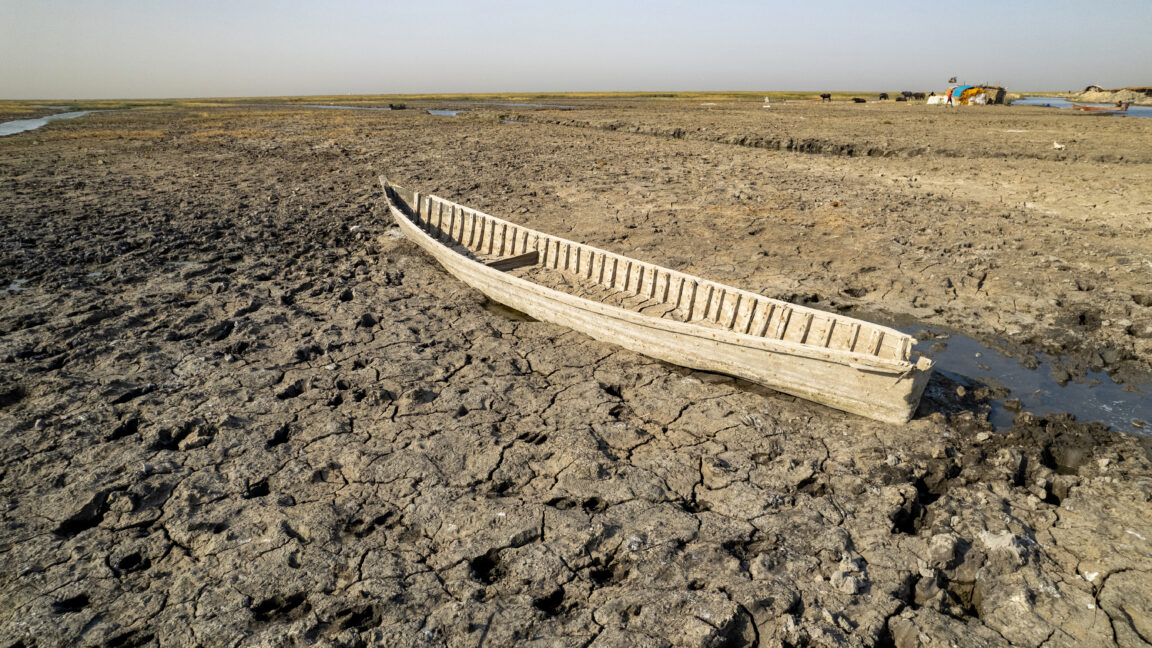
A series of experiments by researchers at the California Institute of Technology found that dry soil—drought conditions—consistently select for and enrich antibiotic resistance in soil bacterial communities. More concerningly, the researchers found that pro-resistance conditions in soil link to higher frequencies of antibiotic-resistant infections in hospitals around the world. And with human-driven climate change, drought conditions are expected to increase. Assuming the link is real, projections indicate that drought-threatened regions across the globe will face heightened emergence of antibiotic resistance.
While the authors acknowledge that more research is needed to confirm the connections, "our study offers a clear example of how climate change has the potential to intersect with microbial ecology to shape public health outcomes," they conclude.
The underlying mechanism hypothesized to explain this connection is a fairly simple one: as soil dries, natural antibiotics produced by soil microbes reach higher concentrations in the remaining pockets of moisture. Those higher concentrations, in turn, select for bacteria that can resist the antibiotics.
Soil to clinic
They found evidence of this in a set of experiments, first finding that the relative abundance of antibiotic and antibiotic-resistant genes increased under drought conditions in soils from five distinct geographic regions. They also dried out soil samples spiked with an antibiotic, finding that the concentration of the antibiotic increased within lingering soil moisture. Further, non-resistant bacteria died off in the drought conditions, while resistant bacteria were unscathed.
They next turned their attention to the bigger picture. Bacteria are known to be good at sharing genetic material, even across distantly related species. This is particularly true for antibiotic resistance genes. The researchers note that not only are soil bacteria and clinical pathogens known to share the same resistance genes, there are examples of the genetic sequence of those genes being 100 percent identical across the strains found in soils and hospitals. The genetic flow between the environmental microbes and clinical pathogens is thought to occur through a variety of pathways, including through agriculture, recreation, and simple dust inhalation.
The researchers collected data on antibiotic-resistant infections in over 100 hospitals across the world and looked at the soil conditions in the areas around those hospitals. They found a strong correlation between increased frequency of resistant clinical isolates and drought conditions. The association held up when researchers accounted for economic factors.
In an accompanying commentary piece, microbial ecologist Timothy Ghaly of Macquarie University in Australia argues that the study reframes how we think about the "soil-to-clinic axis." Instead of a one-way extraction of natural antibiotics from soil, Ghaly writes, "The authors now expand it to describe an ecological pathway through which climate-driven selection pressures in soils actively promote and disseminate antibiotic resistance into hospitals."
In all, the findings offer a warning that we may need a broader approach to combating the rise of antibiotic resistance. "Effective strategies must recognize that antibiotic stewardship in hospitals, while crucial, may not be enough if we neglect stewardship of the planet’s changing climate," he concluded.
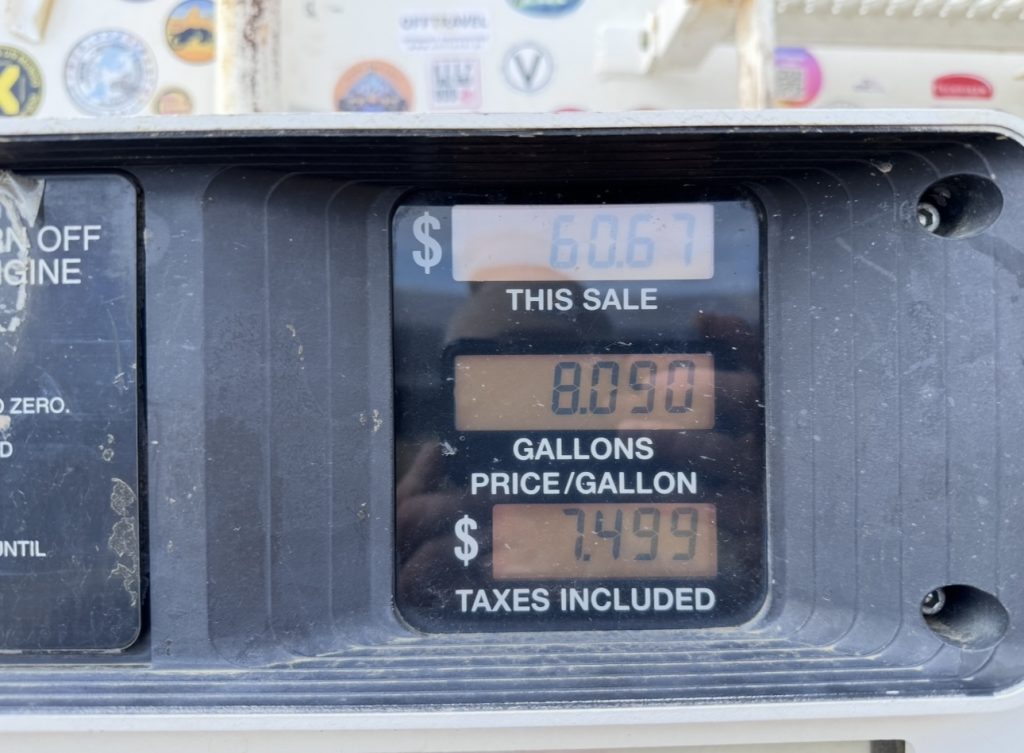
If you’ve paid any attention to the news these past few weeks, or simply stopped at a gas station to fill up your tank, you’ve probably realized that gas prices are on the rise. The new conflict in Iran, as well as the ongoing war in Ukraine, means prices are probably going to stay elevated through the summer, which means you’ll likely be paying more for that summer road trip than you expected.
In an effort to curb rising prices, the Environmental Protection Agency (EPA) announced yesterday plans to issue a waiver to allow the nationwide sale of E15 gasoline—gas blended with 15% ethanol, popularly known as “winter gas”—during the first 20 days of May.
Compared to Summer-grade gasoline, winter gas is cheaper because it’s slightly less energy-dense. That also means it’s a tiny bit less efficient. And depending on what car you drive, it could do more harm than summer gas on your fuel system. Here’s what you need to know.
What’s The Difference Between Summer Gas And Winter Gas?
Back in 1989, the EPA began putting limits on the volatility of gasoline sold at gas stations nationwide. “Volatility,” in this case, doesn’t refer to my portfolio of high-risk tech and healthcare stocks I’m too ashamed to admit my lifetime gains/losses on. Instead, volatility is the point at which liquid evaporates, turning into vapor and entering the air. This is bad, as gas vapors contribute to smog, which can cause respiratory issues for people.
Accuform.com
This law outlaws the sale of gasoline with a Reid vapor pressure (RVP) of over 9 pounds between June 1 and September 15, according to Car and Driver. In places like California, that time window is extended to between April 1 and October 31. RVP, according to the American Society for Testing and Materials, is the gasoline’s vapor pressure at 100 degrees Fahrenheit.
There are a lot of additives that fuel suppliers use to adjust RVP, but ethanol is the most significant. Basically, the more of the corn-based fuel you have in the gas, the higher the fuel’s RVP will be. And the higher the RVP, the more easily it will evaporate from your gas tank when it’s hot outside. During summer months, E10—that is, gasoline blended with 10% ethanol—is the standard, as that’s the most suppliers can add before reaching that EPA-enforced RVP limit. During the winter months, when the gasoline isn’t as susceptible to evaporating, more Ethanol is added to the mix.
Why is the percentage of ethanol higher in the winter? Well, in addition to offering a higher-volatility blend that works better in colder temperatures, it means the fuel can be cheaper. Amsoil explains it well in its blog on the subject:
Winter-blend fuel requires increased RVP. If the fuel doesn’t evaporate readily in cold temperatures, the engine will start hard and run rough when it’s cold outside.
To achieve this, refiners often blend winter gasoline with butane, a relatively inexpensive additive with a high RVP. They adjust the RVP of the final formulation to as high as 15.0 psi to help the gasoline ignite readily in the cold.
Of course, because Butane has a high RVP, it can’t be used during the summer because of the EPA’s rules. Here’s Amsoil explaining how fuel manufacturers make the switch:
Once the temperature warms up in summer, however, high-RVP gasoline can volatilize more easily, which contributes to increased emissions and air pollution.
For that reason, federal law restricts sales of gasoline with an RVP greater than 9.0 from June 1 through Sept. 15.
To comply, refiners reduce the amount of butane in the gasoline and instead use pricier additives, hence one reason gas prices generally increase in summer. The blending process also takes longer, adding to the cost.
So, now you know what those labels on the gas pump talking about ethanol blend are all about – not that it’s likely to matter much if you drive a remotely modern car.
How Does It Affect My Car?
Graphic images: stock.adobe.com; Nissan
The EPA says that cars after 2001 can safely handle gasoline with up to 15% ethanol blend, and that’s true for “flex fuel” cars, which are designed from the factory to handle up to 85-percent ethanol blends. But as Thomas wrote last year, some manufacturers don’t recommend it:
[T]here are lots of vehicles made after 2001 that aren’t designed for E15. For instance, BMWs only approves a maximum of 10 percent ethanol content in its vehicles, as does Mazda, as does Mercedes-Benz on all models not approved for E85. Volvo only approves a maximum of 10 percent ethanol content across its lineup, as does Mitsubishi.
Some other manufacturers like Nissan are more selective when it comes to E15 approval. The current Frontier, Rogue, Z, Pathfinder, and Altima can take E15, but the Sentra, Kicks, and almost all outgoing models like the previous-generation Armada aren’t rated to handle it.
The thing with ethanol is that it’s hygroscopic, which means it pulls in moisture from the air. And having water mixed in with your fuel is, of course, very bad. Anyone who’s seen those videos of vehicles attempting to ford a water crossing only to hydrolock their engines knows that. Also, ethanol, when mixed with oxygen, can form acetic acid, which is the active ingredient in vinegar. While the stuff is good for cooking and cleaning rusty car parts, it’s not so great for fuel system components.
Of course, that doesn’t mean your car will immediately fall apart if you run E15 through it. You’ve probably been doing it all winter without even knowing, along with millions of other drivers on the road. Today’s fuel systems are sealed pretty well, which means water egress isn’t a huge issue. If anything, the rubber hoses in your fuel system might degrade slightly quicker over the life of the car than if you ran E10 year-round. If you have an older car with rubber hoses that aren’t designed to handle ethanol, you might want to be a bit more cautious.
More important is the difference in energy content between winter gas and summer gas. Ethanol is about 30% less energy-dense than gasoline, which means the drop in ethanol from E15 to E10 results in summer gas being roughly 1.7% more energy-dense, according to Car and Driver. That’s enough for a small (but measurable) increase in fuel economy, all other things equal. So while winter gas might be cheaper, you might not actually be saving any money, since you’re using more fuel to drive the same distance.
Why Is The Government Doing This?
Officially, the EPA says it’s issuing a waiver to give drivers more options as the country inches closer to the Summer driving season. Here’s the relevant stuff from the announcement:
Through the waiver, EPA is fortifying the domestic gasoline supply chain and providing Americans relief at the pumps ahead of the summer driving season. Beginning on May 1, 2026, EPA’s waivers will work to prevent disruption in America’s fuel supply by keeping E15 on the market and giving Americans more fuel options.
According to the EPA, not only will drivers benefit thanks to lower prices, but corn farmers will also see a benefit thanks to the increased demand for ethanol, which is derived from corn. The announcement even threw in a quote from the Secretary of Agriculture:
Allowing the summer sale of E-15 will provide drivers more options at the pump, and deliver a bigger domestic market for American farmers,” said U.S. Secretary of Agriculture Brooke L. Rollins. “While today’s announcement is great news for farmers, year-round E-15 is essential for the farm economy, and Congress needs to find a common sense solution that provides much needed certainty to consumers and farmers.
The savings found at the pump are debatable for the energy density reasons mentioned above, but whether people actually realize that the slightly lower prices won’t actually result in any money saved is another story. As Bloombergpoints out, the timing of this move to lower prices comes during a midterm election year, when voters are increasingly faced with higher costs of living. It’s a safe bet to assume this waiver is being used to counter the spike in oil and gas prices from the current conflict in Iran.
This isn’t the first time we’ve seen an admin use waivers on RVP to drive down fuel prices during an election cycle. The Biden administration did the same thing back in the spring of 2022, claiming to counter fuel price increases due to the war in Ukraine (though pandemic-induced supply chain ripples also contributed to those price jumps). These emergency waivers have been extended several times since, and they’re continuing again into the summer of 2026.
What does this mean for the environment? Well, more E15 gas in cars means more gasoline evaporating into the air when it gets hot out, which will likely result in more harmful smog. But that tracks with this current admin. Last year, it eliminated penalties for manufacturers that don’t meet corporate fuel economy targets and announced a $625 million investment into the coal industry. The push to keep winter gas flowing comes just three days after the Department of the Interior agreed to pay French company TotalEnergies $1 billion to walk away from an offshore wind power lease, directing the company to use that money towards natural gas projects instead. The government’s priorities are clear.
While this waiver is only set to last a few weeks, the EPA says it’s “ready to extend the emergency fuel waivers as long as the fuel supply circumstances warrant such action.” Seeing as how the waiver’s been extended for the last few summers past, I would count on that happening.
Across much of the Western United States, winter 2026 was the year the snow never came. Many ski resorts got by with snowmaking but shut down their winter operations early. Fire officials and water supply managers are worried about summer.
Where I live in Boise, Idaho, temperatures hit the low 80s Fahrenheit (high-20s Celsius) in mid-March. The same heat dome sent temperatures soaring to 105° F (40° C) in Phoenix.
Ordinarily, water managers and hydrologists like me who study the Western US expect the mountain snowpacks to be at their fullest around April 1. Snowpacks are natural reservoirs of water that farms and communities depend on through the hot, dry summer. Their snow water equivalent, meaning the amount of liquid water in the snowpack, is seen as a bellwether for water supplies.
But the 2026 water year has been anything but ordinary. In fact, its snow drought has few historical analogs.
Data from the US Department of Agriculture’s Natural Resources Conservation Service shows that out of approximately 70 river basins across the Western US, only five are at or above the 1991–2020 median snow water equivalent for this time of year. Most of those are clustered around the Yellowstone region of western Wyoming and eastern Idaho.
By contrast, 11 basins have less than 25 percent of the 1991–2020 median, and more than half are below 50 percent. The headwaters of critically important rivers, including the Colorado, the Columbia, and the Missouri, are peppered with basins that are far below historical averages.
Just because the Western US is in a snow drought doesn’t mean it isn’t getting precipitation. Temperatures have been high enough since the start of the water year in October that a lot of what normally would have fallen as snow fell as rain instead.
The West experienced a very warm December at all but the highest elevations, but strong storms also drenched large parts of the region. Washington state was swamped with rain that triggered flooding and melted the existing snowpack.
The total area of the Western US with snow cover has been exceptionally low compared to the years 2001 to 2025.
Credit:
National Snow and Ice Data Center
Temperatures in January were less extreme but still warmer than historical averages. However, precipitation in January was far below the 1991–2020 average throughout much of the region. February brought precipitation conditions closer to historical averages, but temperatures were much warmer than normal.
The Western US, therefore, got a triple whammy: Two of the three critical snow-accumulation months were too warm, and the third was too dry.
Water worries ahead
So what does this mean for water supplies and river flows?
Water managers in Wyoming and Washington are already signaling that some water rights holders—cities, irrigation districts, individual farms, and industries can take limited amounts of water from rivers, canals, and aquifers—can expect to receive less than their full allotment of water in 2026. It’s not unreasonable to expect other states to soon follow suit.
Throughout the Western US, water rights are administered according to the Doctrine of Prior Appropriation—those who hold the oldest legitimate claims to water from a river, reservoir, or aquifer are entitled to receive their allotments first.
Junior water rights holders who may be at risk of receiving less than their full allotment of water likely have difficult decisions ahead related to the planting and management of their crops. The challenges are compounded by the likelihood of increases in fertilizer and transportation costs associated with the ongoing war in Iran.
Another big concern is whether the historic snow drought is setting up the West for a bad fire season. That’s still an open question.
Rain has meant moisture is available now for plants to grow, but the lack of snowpack that normally keeps meltwater flowing through summer raises concerns about whether those plants will dry out, leaving them ready to burn.
Fire is a historically important feature of the forest and rangeland ecosystems of the West, and these ecosystems are to some degree adapted to large swings in conditions from year to year and season to season.
Because precipitation across much of the West is close to historical averages, there is snow in some of the highest-elevation mountains. And at lower elevations, some of the precipitation that fell as rain likely remains in the soils.
Weather conditions in the late spring and summer—how much rain falls and how hot and dry conditions become—will play critical roles in determining the shape forests and rangelands will be in for fire season.
What this winter suggests about the future
The record-low snowpack may be a harbinger of what a warmer future will look like in the region. Many researchers have investigated how climate change will influence snowpacks and water supply throughout the Western US, but questions and critical challenges remain.
The Federal Communications Commission yesterday announced it will no longer approve consumer-grade routers made outside of the US, citing a President Trump directive on reducing the use of foreign technology for national security reasons. The action will prevent foreign-made routers from being imported into or sold in the US.
Routers already approved for sale in the US can continue to be sold, and consumers can keep using any router they've previously obtained, the FCC said. But the FCC will not approve new device models made at least partly outside the US unless the Department of Defense or Department of Homeland Security determines that the router does not pose national security risks.
The prohibition applies to both US and foreign companies that produce routers outside the US. Foreign production includes "any major stage of the process through which the device is made, including manufacturing, assembly, design, and development."
"This action means that new models of foreign-produced routers will no longer be eligible for marketing or sale in the US," FCC Chairman Brendan Carr wrote on X. "The determination included an exemption for routers that the Department of War (DoW) or the Department of Homeland Security (DHS) have granted 'Conditional Approval' after finding that such device or devices do not pose such unacceptable risks."
Router makers seeking conditional approvals must submit, among other things, a "justification on why any foreign manufactured router is not currently manufactured in the United States, including why these foreign sources were selected and whether alternatives exist," and a "detailed, time-bound plan to establish or expand manufacturing in the United States."
The FCC said it acted after receiving a national security determination from an interagency group of security experts. "Recently, malicious state and non-state sponsored cyber attackers have increasingly leveraged the vulnerabilities in small and home office routers produced abroad to carry out direct attacks against American civilians in their homes," the determination said.
Covered List now covers all foreign routers
The FCC granted a waiver to previously authorized routers allowing them to receive security patches and other "software and firmware updates to ensure the continued functionality of the devices," until March 1, 2027. The FCC said it may extend that timeframe to allow software updates for longer.
The FCC implemented the prohibition on new routers by updating its Covered List to include all consumer-grade routers made in foreign countries, except those that receive a conditional approval. Routers for this purpose are defined as "consumer-grade networking devices that are primarily intended for residential use and can be installed by the customer," and which "forward data packets, most commonly Internet Protocol (IP) packets, between networked systems."
Wi-Fi routers with vulnerabilities are targets for criminal hackers building botnets. The FCC said that "compromised routers can enable in-depth network surveillance, data exfiltration, botnet attacks, and unauthorized access to US government or American businesses’ networks. The United States must have secure and trusted routers. However, currently a majority of the routers in American homes and businesses are produced outside of the United States. Allowing routers produced abroad to dominate the US market creates unacceptable economic, national security, and cybersecurity risks."
The FCC's Covered List already included a wide range of technology and services provided by Chinese device-makers Huawei and ZTE, the Russian security company Kaspersky Lab, several Chinese telecom companies, and other companies. The Carr FCC decided on a sweeping approach for routers instead of targeting specific manufacturers that have faced scrutiny, such as TP-Link, which was founded in China but relocated to the US in 2024.
TP-Link was already facing the possibility of a US ban, although the Trump administration reportedly delayed the proposed TP-Link ban ahead of a planned meeting between Trump and China President Xi Jinping. In a statement provided to Ars today, TP-Link said the FCC action "appears to affect virtually all new consumer-grade routers being sold in the United States," because "nearly every manufacturer in this sector produces hardware abroad or relies on a global supply chain." TP-Link said it welcomes the industry-wide scrutiny and that it is confident in the security of its supply chain.
Carr rescinded Biden-era security mandate
To justify the changes, the FCC said that "malicious actors have exploited security gaps in foreign-made routers to attack American households, disrupt networks, enable espionage, and facilitate intellectual property theft. Foreign-made routers were also involved in the Volt, Flax, and Salt Typhoon cyberattacks targeting vital US infrastructure."
Chinese hacking group Salt Typhoon infiltrated the networks of major US telecom companies, but yesterday's FCC action only affects consumer-grade routers mainly used in homes. In November 2025, the Carr FCC rescinded a Biden-era ruling that required telecom providers to secure their networks, alleging that the previous administration's action was illegal and did not effectively address the threat.
Carr, who has made it clear he takes direction from Trump despite arguing during the Biden era that the FCC should operate independently from the White House, attributed the FCC's latest move to Trump's leadership. “I welcome this Executive Branch national security determination, and I am pleased that the FCC has now added foreign-produced routers, which were found to pose an unacceptable national security risk, to the FCC’s Covered List," Carr said. "Following President Trump’s leadership, the FCC will continue [to] do our part in making sure that US cyberspace, critical infrastructure, and supply chains are safe and secure.”
The FCC said it was acting on Trump's 2025 National Security Strategy's directive that “the United States must never be dependent on any outside power for core components—from raw materials to parts to finished products—necessary to the nation’s defense or economy."
Router makers can seek conditional approvals under the same process used for the FCC ban on foreign-made drones. For drones, conditional approvals have been granted to US-based companies SiFly Aviation and Verge Aero, the Norwegian company ScoutDI, and Israeli company Mobilicom. Chinese drone-maker DJI sued the FCC over the ban.
TP-Link and Netgear say they aren't worried
The FCC said the national security determination on routers was made after "the White House convened an executive branch interagency body with appropriate national security expertise, comprising agencies that included appropriate national security agencies." The members "determined jointly and severally that routers produced in a foreign country, regardless of the nationality of the producer, pose an unacceptable risk to the national security of the United States and to the safety and security of US persons," the FCC said.
"Routers in the United States must have trusted supply chains so we are not providing foreign actors with a built-in backdoor to American homes, businesses, critical infrastructure, and emergency services," the FCC also said.
TP-Link's statement to Ars said that "placing all manufacturers and their supply chains under the same scrutiny is a positive step in the direction of making the router industry more secure." Now that it is a US-based company, TP-Link said it is "committed to making further investments in America and has already been planning to establish US-based manufacturing to complement our existing company-owned facilities in Vietnam."
Netgear provided a statement to Ars today. "We commend the administration and the FCC for their action toward a safer digital future for Americans," Netgear said. "Home routers and mesh systems are critical to national security and consumer protection, and today’s decision is a step forward. As a US-founded and headquartered company with a legacy of American innovation, Netgear has long invested in security‑first design, transparent practices, and adherence to government regulations, and we will continue to do so."
We contacted numerous other router makers about the FCC action and will update this article if we receive new comments.
When the Trump administration announced plans last year to rescind a rule limiting roadbuilding and timber harvests on millions of acres of national forests and grasslands, officials called the repeal necessary to prevent and manage wildfires.
But as the US Department of Agriculture prepares to release its draft environmental impact statement for the rescission, that justification is unraveling. And many critics of the move see the claim that roads are needed to fight fires in remote forests as cover for a giveaway to the timber industry.
On average, about 8 million acres have burned each year between 2017 and 2021, according to the Congressional Budget Office, nearly double the average from 1987 to 1991. Wildfires on federal lands average about five times the size of those in the rest of the country, leading some of the nation’s top land managers to argue that national forests are a front line for fighting the nation’s steep increase in wildland blazes.
Yet a chorus of fire scientists, frontline firefighters, legal experts, and the agency’s own historical record have contradicted that reasoning, saying that roads don’t reduce wildfire risk; they multiply it.
If he had to name the five biggest obstacles to effective wildfire response, lack of roads “probably either wouldn’t be on the list, or it’d be at the bottom,” said Lucas Mayfield, a former Hotshot firefighter and co-founder of Grassroots Wildland Firefighters, a nonprofit that advocates for policy on behalf of firefighters.
Now, a new study published in the journal Fire Ecology is throwing more cold water on the heated assertion that confronting the steep increase in the amount of US land burning in wildfires requires cutting roads into previously untracked national forests.
Looking at a database of roads through national forests, the January study found that from 1992 to 2024, wildfires were four times more likely to ignite within 50 meters of a road than in a forest without routes for motor vehicles.
“The big surprise was just how stark the differences were,” says Greg Aplet, lead author on the study and senior forest ecologist at The Wilderness Society. “We found the exact same result in every Forest Service region, consistent across the entire National Forest System.”
The number of ignitions drops steeply with distance from roads, the study discovered.
Roads of fire
The study also reveals a fire management paradox.
Roads enable access to fight wildland blazes, and Aplet’s data shows that some of those road-proximate fires will be discovered early and snuffed while they’re small precisely because the road is there. But many of those fires would be less likely to ignite in the first place were it not for the roads, which bring people, the dominant source of ignitions, into the forest. According to Congressional Research Service data, 89 percent of wildfires nationwide are human-caused.
“The more people you put in the woods, the more fires you’re most likely going to have,” said Mayfield.
Until recently, Forest Service leaders agreed.
In its original environmental impact statement for the 2001 Roadless Rule, the agency wrote: “Building roads into inventoried roadless areas would likely increase the chance of human-caused fires due to the increased presence of people.” Meanwhile, fire data indicated that prohibiting road construction and reconstruction in these areas “would not cause an increase in the number of acres burned by wildland fires or in the number of large fires.”
The Hughes Fire burns along Lake Hughes Road in Los Angeles County on Jan. 22, 2025.
Credit:
Andrew Avitt/USDA Forest Service
The new study found fires near roads were on average smaller, but notes that high variability makes this difference difficult to determine definitively. The fires that escaped initial attack by firefighters, the ones that become the large, catastrophic blazes driving the current crisis, show no meaningful size difference between roaded and roadless areas. So more roads means more fire, and they provide no improvement in the outcomes of the fires that matter most.
Beyond human ignitions, roads also alter the ecological conditions that drive fire risk. Aplet’s research found elevated ignitions from lightning near roads, not because there were more strikes, but because roads change ground-level fuel conditions by putting gaps in the forest canopy that allow sunlight and wind to heat and dry vegetation on the forest floor.
Roads also serve as corridors for invasive species, many of which evolved to use fire to help them spread. In the Great Basin, an area that stretches from Salt Lake City to nearly Sacramento, southern Oregon to Las Vegas, cheatgrass carried by vehicles, boots, and livestock to roadsides has displaced native vegetation by creating continuous fields of fine stalks that dry out when other grasses are just sprouting. The dry cheatgrass ignites easily and burns quickly across landscapes where native grasses that stay moist later in the season and grow in dispersed bunches previously inhibited the spread of the flames.
Vital protection for habitat, water, and the climate
The areas that the rule covers are vast. After state-specific carve-outs for Idaho and Colorado and the separate exemption of Alaska’s Tongass National Forest, all of which came after the rule’s adoption, it today applies to roughly 45 million acres.
Proponents of the Roadless Rule say that it’s a vital environmental protection that achieves something no other regulation can. According to Defenders of Wildlife, while roadless areas make up only about 2 percent of the lower 48 states, they provide habitat for up to 57 percent of vulnerable terrestrial wildlife, home to more than 1,600 at-risk species and 200 species protected by the Endangered Species Act.
Roads can change that picture. Sediment from road construction, for instance, can smother fragile fish spawning beds and clog culverts to block their migration.
Roadless areas provide clean drinking water for up to 60 million Americans, hold much of the nation’s remaining old-growth forest, and capture up to 15 million tons of carbon per year to help slow climate change.
“There’s nothing that protects what the Roadless Rule protects,” says Kristin Gendzier, senior attorney at the Southern Environmental Law Center. “You’ve got really protective designations… like a wilderness designation, but those are relatively small. After that, the Roadless Rule is the next big thing.”
She argues that forest plans, created by land managers, provide weaker protections, can be amended, and only last 10 to 15 years. As the Trump administration’s other environmental-regulation rollbacks take effect, many environmentalists see the prevention of roadbuilding as many areas’ best chance for lasting protection.
“If you rescind the Roadless Rule, you are now saying these 45 million acres, do what you will,” Gendzier said.
Paths to protect forests, or cut them down?
The question before a federal court may soon be whether the fire justification for rescinding the rule constitutes reasoned decision-making, or, as defenders of the rule argue, a conclusion that runs counter to the evidence before it. At stake is a 25-year-old rule that has survived every legal challenge from various presidential administrations, driven by special interests, but now faces its most serious test yet.
“The intent of rescinding the 2001 Roadless Rule is to return to local decision-making as part of individual national forest and grassland plans, which includes robust public involvement and focus on land management decisions at the right scale,” a USDA spokesperson said in response to a request for comment on the rule repeal and the new study. “Currently, nearly half of our roadless acres, over 28 million, are at high or very high risk of catastrophic wildfire and are in desperate need of treatment.”
According to Matt Thompson, a former Forest Service fire researcher who now runs the consultancy firm Risk & Resilience, that 28 million figure is “generous.” A 2022 paper co-authored by Thompson challenged the geographic logic underlying claims that reducing wildfires in currently unroaded forests would protect communities, where most of the financial losses from wildfires occur.
Tracking the direction fire spread from one jurisdiction to another, the researchers found that fires on federal lands originated outside them, on private and state land, more often than blazes in national forests crossed boundaries into more-developed areas.
“You could almost invert the framing of the question and say: ‘How could we be better managing ignitions [outside of national forests] so that they’re not burning down our natural and cultural resources?’” Thompson said.
A separate analysis of four decades of satellite fire data, shared this month as a preprint by researchers at Oregon State University and the University of Oregon, found that inventoried roadless areas have not burned at significantly higher rates or severity than roaded national forest lands, and that in the most recent decade, roadless areas burned at a slightly lower rate than forests with roads. The elevated fire rates often attributed to roadless areas, the study found, are driven by congressionally designated wilderness areas, which the rule change would not affect.
Proponents of rescinding the rule point to wanting more flexibility in forest management, a rationale that has been backed by timber interests.
A logging operation is seen in New Hampshire’s White Mountain National Forest on Dec. 17, 2023.
Credit:
Andrew Lichtenstein/Corbis via Getty Images
“The roadless rule itself really reflects an older way of thinking about forests as static landscapes, which don’t align with today’s realities of wildfire, declining forest health, and climate stress,” said Nick Smith, head of public affairs at the American Forest Resource Council, a western timber industry trade organization that publicly supported the repeal.
“Poor access is a top obstacle to fire suppression and in nearly every major wildfire of the past 15 to 20 years the Forest Service has identified that lack of road access as a key barrier to effective response,” he added.
But firefighters have well-developed systems for getting into hard-to-access areas, Mayfield said, including crews that land or rappel into fires using helicopters, and smokejumpers who parachute into remote wildfires from planes that take off from nine bases across the West. New roads, which would require upkeep and maintenance, shouldn’t be a priority, he said.
According to Mayfield and Aplet, many existing roads in national forests are already impassable, part of a backlog of Forest Service maintenance growing as the agency dedicates more of its resources to fighting wildfires.
Defenders of the rule say that the emphasis on fire mitigation is a misdirection from the administration’s true motivation for cutting more roads into forests—opening more land up to logging. In March 2025, President Donald Trump issued an executive order, “Immediate Expansion of American Timber Production,” calling for increased timber harvesting on federal lands and the “streamlining” of environmental permitting for logging.
“The industry and their political allies do not like the roadless rule because it gets in the way of logging. Full stop,” said Drew Caputo, vice president of litigation for Lands, Wildlife, and Oceans at Earthjustice, a nonprofit environmental law organization that has defended the Roadless Rule in court since its adoption in 2001.
“The nature of their attacks has shifted, and that tells you something about why they’re talking about different topics,” said Caputo. “That disconnect suggests that the real concern is not fire.”
While the National Environmental Policy Act, the Endangered Species Act, and the National Forest Management Act would all still apply to forests that lose their protection from roadbuilding, the Roadless Rule is the protective floor, he noted. Without it, industry can seek access to areas that now are functionally off-limits.
Aplet, with The Wilderness Society, characterized the push to rescind the rule not as a genuine attempt to mitigate fire risk, but part of the larger administration crusade to roll back environmental regulations.
The legal test
The Administrative Procedure Act requires that when an agency rescinds a rule, it must be able to demonstrate a rational connection between the evidence and the eventual decision, and cannot be “arbitrary and capricious.” Essentially, the administration must be able to logically and scientifically defend its argument in the environmental impact statement due this month, and a court will rule on whether it meets that standard.
“They cannot offer as an explanation a decision that just runs counter to the evidence before it,” says Gendzier.
Under the National Environmental Policy Act, the agency must fully analyze the environmental consequences of rescinding the rule, consider a full range of alternatives to the rescission, and meaningfully grapple with the science, including the Aplet study.
“They’ve been pretty cavalier in their public statements so far about the fire-based reasons,” Caputo said. “Much of what they’re saying is seemingly contrary to the science, and those are all things they’re going to have to deal with.”
While the administration’s motive in lifting the rule won’t determine the legal outcome, and proving it is using the nation’s wildfire crisis as a pretext to increase logging would be difficult, Caputo said failure to engage with the body of evidence indicating that roads increase fire ignition risk will be actionable and will likely result in legal challenges.
The Wildland Fire Mitigation and Management Commission, a congressionally chartered, bipartisan body with 50 members from across industry, science, and fire management, spent years producing a comprehensive look at wildfire policy. That resulted in 167 official recommendations in 2023 across every dimension of the problem, including risk reduction, fire suppression, post-fire recovery, workforce, and technology.
According to Tyson Bertone-Riggs, co-founder of the Alliance for Wildfire Resilience and a staff co-lead of the commission, the Roadless Rule didn’t feature in any recommendations or significant discussion.
“I think there is a risk in wanting to use fire as a piece of an argument,” he said. “Roadless certainly deserves a conversation, but it’s probably a separate conversation.”
Here is just a sampling of things happening right now in Colorado that we can’t attribute solely to climate change, but that we know will be happening more and more often precisely because of climate change.
Loveland banned golf carts and ordered duffers to walk because the dried-out turf couldn’t handle any more damage from tires. Satellite sensors show the portion of Western lands covered by snow at record lows. Thornton has already imposed strict watering limits for the summer. Ski resort workers had their hours cut. Colorado’s signature ponderosas are on hospice. The governor just activated the drought task force, again, warning that Colorado is in the middle of its warmest year in 131 years of recordkeeping.
Colorado is warmer and drier than 50 years ago. That is not in dispute. Climate change is present-tense.
We set out to catalog what that means on the ground and in the air across Colorado. Not as a diagnosis for depressives, but as a motivation for visionaries. Only by realizing what has already changed can Coloradans figure out where to start the rescue, according to many of the voices we consulted.
“We have, unfortunately, a lot of confidence that we should expect continued warming for the next several decades,” said Adrienne Marshall, a climate change professor and researcher at Colorado School of Mines. “The choices we make as a society about our carbon emissions can still have a large effect on how much warming we experience, and by extension, what the impact is on snow and water in the West. We need to prepare for continued warming, but the amount of warming that happens is to a very large degree still up to us.”
State Forester Matt McCombs calls it “an end of innocence,” as he travels the state warning people of the unstoppable demise of beloved forest tracts. At the same time, McCombs added, “you’ve got to hold harmless the past. We’ve got to stop judging each other so harshly.”
Demanding to know whose fault this was can be just another way of saying there’s nothing to be done about it, McCombs said. “People want accountability and reconciliation. And I don’t know if we have the time. We can adapt. We just have to move.”
McCombs tries to pair his discouraging forest health maps with encouraging words on how humans are good at solving problems.
“We have got to be easy on each other, because things are about to get bananas,” he said. “And they’re already bananas.”
The Heat
Shawn Camp cools off while passing by a mist-spraying fan on Main Street in Grand Junction in July of 2024. (Hugh Carey, The Colorado Sun)
DENVER
Shaina Oliver used to work in retail. As soon as customers left and the doors were locked for the day, her chain-store employer would shut off the air conditioning. As the employees cleaned the aisles and restocked shelves, temperatures inside the big box crawled relentlessly toward an exhausting swelter.
Human-caused climate change pushed up average Colorado temperatures 2.3 degrees Fahrenheit from 1980 to 2022, according to Colorado State University’s 2024 climate update. Even under assumptions of moderate reductions in greenhouse gas emissions — now being actively subverted by Trump administration actions — Colorado’s average could climb 1 to 4 degrees higher within 24 years.
Oliver lives with an asthmatic son in northeastern Denver in the shadow of the highly polluting Suncor refinery. The current reality and the guaranteed future of persistently hotter summers make her worry for all kinds of neighbors: pregnant women laboring in hot food service kitchens or hotel rooms, roofers scraping tar shingles at 120 degrees, children wheezing in the ozone produced by fossil fuel industries like Suncor, Xcel’s local natural gas power plant and others.
When it comes to climate change and temperature, the anecdotal is increasingly statistical. Nine of the 11 hottest Colorado years on record have happened since 2012, according to a CSU update.
As part of Moms Clean Air Force, Oliver is helping argue for a bill in the legislature ordering businesses to provide shade, clean water and humane temperatures at all times. When she meets skeptics, she mentions having to sit out work during her final pregnancy to avoid heat and strain.
“It gets really hot inside those buildings, really quick,” Oliver said. “And we have Latina moms working out on farms. If your body’s overheating, the baby is more likely to miscarry. So that’s a lot of our worries, as moms.”
The Water
Low water levels in Blue Mesa Reservoir on March 2 revealed a foundation from the lost town of Iola. (Dean Krakel, Special to The Colorado Sun)
THE RIVERSIDE
So much of Colorado daily life depends upon the frozen water in a snowbank in the heights of the Gore Range in January making it to a moving stream by May. And that necessity is manifesting less and less.
Lake Powell is the second-largest reservoir in the United States and the key bucket for the water lives of 40 million people in seven states. Under current conditions, already radically depleted by the ongoing 25-year drought, Powell will take in only 36% of the average it usually gets from the Colorado River. The snowpack in Colorado, Utah and Wyoming meant to fill Lake Powell is abysmal, and higher temperatures mean crackling-dry ground will suck up more of the already-low snowmelt before it hits the pipelines otherwise known as rivers.
Four of the five driest water years in 128 years of records have occurred since 2000, with the winter of 2025-26 on pace to join that ignoble grouping. Northwestern Colorado summer precipitation is down 20% from the 50-year average leading up to 2000. Southwestern spring precipitation is down 22%.
In previous years that were this dry, southwestern Colorado farmers sometimes received only 10% of the irrigation water they planned for. Denver Water, Aurora Water and northern Colorado communities are contemplating strict home watering restrictions for the summer. Record-high winter temperatures on the Front Range dry up the sparse snowstorms so quickly that utilities have regularly shut down power in foothills red flag winds, in order to avoid sparking wildfires.
Federal officials will most likely have to drain upstream recreation buckets like Blue Mesa and Flaming Gorge reservoirs to keep Lake Powell at a level that allows crucial hydropower generation. When Powell can’t generate much — or in a deadpool scenario it could reach by August, any — power, Colorado’s coal-fired power plants must stay open longer than planned to stabilize the energy grid.
Healthy, deep snow doesn’t just supply water content, noted Colorado School of Mines hydrologist and geology professor Adrienne Marshall. Regular snows build up what researchers call “cold content,” that acts as a refrigerator during spring warmup. The cold content allows snowbanks to melt beneficially later in the water year, soaking the ground all the way to streambeds and keeping a steady water flow.
Shallow snow readings are obviously bad for those prospects, Marshall said. But she watches another map, one showing not snow depth, but basic snow coverage, at any depth, across the entire western half of the U.S. And frankly, those maps look horrendously red right now, as in, minimalist snow cover.
In mid-February, Marshall said as she pulled updates onto her computer screen, “it looks like we are sitting currently at a record low for total snow covered area in the western U.S. since satellite records began in 2001.”
It comes down to a simple fact and a simple warning, Marshall said.
“The snow is kind of our big reservoir.”
And the snow is in serious trouble.
The Crops
The fields of Cantwell Farms on Feb. 18 in Keenesburg. (Kathryn Scott, Special to The Colorado Sun)
KEENESBURG
Adapt or fail. As a young farm family with a tenuous leasehold on 1,400 acres east of town, the Cantwells have always known this.
As their feet crunch along the tops of winter wheat dried out too soon in a February warm spell, the Cantwells know that climate change requires them to renew their vows of flexibility with extra fervor.
If their ditch company cuts their April allocation because the reservoirs are draining, they could still plant thirsty corn on some fields and turn others fallow to preserve their water.
If there’s not enough water for corn, they can switch to milo. But while milo needs less water, it still needs a spring jolt, so if the plains stay as dry as they have been then the milo dies and it’s time to file a crop insurance claim.
In even an average wet year, they could get three cuttings of alfalfa, also a thirsty crop. Alfalfa pays the bills when other plans wither — the local cash market bids up hay prices instead of a grain elevator operator tightening bids for multinational commodities that swing on trade whims.
But without June rains in Weld County, the alfalfa jackpot may only hit once, erasing second and third cuttings along with chances of ending the year with a profit.
They could try for a higher margin on a few hundred acres, growing seed wheat for a local seed supplier. But any profit there would disappear hiring a custom combine company, which would rather sweep corn 1,000 acres at a time.
The Cantwells owning their own combine would be best, cutting, separating and windrowing the right grain to chase the changing weather without complaining about tiny patches of barley or millet or grain corn. A new combine starts at $500,000.
Casey and TaylorAnn Cantwell with the youngest of their three children, daughter Maddie, 1, in the fields of Cantwell Farms on Feb. 18. Winter wheat was planted in October during what Casey says were great soil and weather conditions. “Now we have this,” he says as he looks down at wheat plants that should be mostly green shoots with some brown tips. (Kathryn Scott, Special to The Colorado Sun)
That’s where the state comes in to help, said Kristen Boysen, managing director of the Department of Agriculture’s Drought and Climate Resilience Office. The Cantwells applied for a state grant, and when they won it they bought a used combine.
Harvesting is a distant worry on an unseasonably warm mid-February day. Casey Cantwell is inside the machine shed, tweaking another climate change adaptation and profit-scraping wonder tool. If he switches the 12 planter pods on the back of his tractor from hydraulic to electronic, he and wife, TaylorAnn, will be adapting through precision.
The tractor can talk to satellites. The coordinates tell them when they have driven up a hill that will dry out faster than the surrounding lowlands. The electronic seed meters will respond by dropping only 9,000 corn seeds per acre instead of the 35,000 dropped on an acre of wetter ground. Respecting microclimates cuts waste.
While her husband works on the planters, TaylorAnn is trying and failing to find moisture around the emerging winter wheat, and wondering what other changes are lurking in last year’s stubble. The wheat stem sawfly is gaining ground in Weld and other plains counties.
The sawfly larvae winter inside the hollow stem stubs. When adult sawflies emerge, they lay eggs inside fresh stems. Hatched larvae crawl down toward the soil and chew a V-shaped notch just before harvest, and a ruinous percentage of stalks fall over like felled redwoods. Once the wheat head hits the dirt, even a half-million-dollar combine can’t pick it up and save it.
“If it’s not cold enough in the winter to kill some of those,” TaylorAnn began, “then the larvae will thrive in the spring and so we might see a bad year for pests.”
Then she looked down at her outfit. Tennis shoes in February.
And she shrugged.
The Blackouts
Bobby Everett, partner and general manager at Evergreen Brewery, says the brewery and Boone Mountain Sports together lost hundreds of thousands of dollars right before the holiday last December when Xcel Energy cut power to Evergreen during a high-wind event. (Kathryn Scott, Special to The Colorado Sun)
EVERGREEN
The Boone family is willing to do its part to adapt to climate change in Jefferson County: The more frequent wildfires, the appalling, but necessary, forest thinning to protect homes, even the electrical outages called preemptively to prevent sparking power lines in hot hurricane-force winds.
But when they shut power to a holiday-hosting brewery and a bustling ski shop the week of Christmas, it’s exceedingly hard to stay nice. Nice would come with a $200,000 price tag this year, the cost in trashed food and lost ski rentals when Xcel cut off power in parts of Jeffco ahead of a threatening late December windstorm.
“We can’t eat the amount we lost,” said Logan Boone, whose family has run Evergreen Brewery and Boone Mountain sports for decades in an upstairs/downstairs retail center north of town.
In their businesses, climate change is at top of mind. The slopes giveth, and the slopes taketh away. A terrible snow season like this one means Front Range day skiers aren’t stopping by to pick up ski packages or buy new helmets. Yet the tuneup business can thrive, as Boone Mountain’s backshop guys drip burning wax into ski ruts gouged by exposed rocks and branches that would have stayed buried in normal years.
More frequent power shutoffs are a more recent challenge from changing foothills weather and climate. Xcel, after paying out $640 million to settle claims it disputed from the Marshall wildfire, is now shutting off neighborhoods’ power ahead of expected red-flag windstorms. It’s already happened multiple times this winter, the latest on Saturday.
“We totally agree with the concepts of preventing massive problems, like a big fire potential, that is super scary,” Boone said. “That’s way worse than shutting off power and eating the cost of what might happen, right? And so in that regard, with Xcel, I’m OK with this concept.”
“Except the only problem with that is, like, we can’t afford it.”
Insurance didn’t cover their losses from the extended shutdown. Local businesses felt Xcel failed to turn power back on afterward for far too long, and didn’t give out helpful information. The Boone siblings feel they need a backup generator since this will be a regular event, but that’s another $50,000 they’re not sure they can handle.
“We’re in the ski world. So climate change is massively huge in our realm of things,” Boone said.
“I’m not really sure where the buck stops. But you can’t just turn off the power and expect commerce to end.”
The Bad Air
In this July 11, 2019, file photograph, southbound Interstate 25 traffic lanes slow to a crawl at the interchange with Interstate 70 just north of downtown Denver. (AP Photo/David Zalubowski, File)
ALONG I-25
One kind of pollution is making another kind of pollution far worse.
The global rise in human-caused greenhouse gases that create climate change have raised Colorado’s average temperature at least 2 degrees so far. More hot days mean more high ozone days, and ozone is currently Colorado’s most acute local pollution problem.
“Only” 23 high ozone alert days were called in 2025, which sounds great only in comparison to the 41 alerts issued for the choking ground-level pollutant the year before. And regional air quality officials are the first to admit that last year, we only got lucky because of the wind.
Here’s how it works: Nitrogen oxide is a pollutant produced by fuel burning, whether in gasoline car engines, coal or gas-fired power plants, and the materials burned up in the region’s increasingly intense wildfires.
Volatile organic compounds leak into the air from oil and gas production and distribution, from household chemicals like paint or cleaning fluids, and from countless industrial processes.
Nitrogen oxide and VOCs mix and then bake under hot sunshine into ozone, which attacks the respiratory system and can lead to or exacerbate asthma, heart conditions and other health problems. Ozone reactions tend to be worse in lower-income, industrial or traffic-choked urban areas, which are also some of the urban heat islands at most risk from accelerated temperature rises.
In the parlance of the EPA Clean Air Act, nine Front Range counties have been severely “out of attainment” for federal ozone health standards for years now. Violations got worse as fracking grew to make Colorado the nation’s fourth largest oil producing state, and as miles-driven increased alongside the population surge to 6 million residents.
Wildfires exacerbated by higher temperatures and a 25-year drought at least partially attributable to climate change have also worsened the ozone problem, drifting in more frequently from Oregon or California or Canada or Grand County and cooking in the Front Range stew.
After an alarming 2024 season with dozens of high ozone alerts, 23 in 2025 was a brief respite. But Regional Air Quality Council chief Mike Silverstein pointed out in hearings with state regulators that opportune winds were the biggest factor in the drop, blowing the ozone precursors out of the Interstate 25 valley before they were fully cooked.
To be fair, Silverstein does think recent policy changes are pushing ozone readings in a better direction. Gov. Jared Polis ordered regulators to make rules that would sharply lower nitrogen oxide emissions in oil and gas production. Small engines in leaf blowers and lawn mowers make an outsized contribution to ozone, and RAQC and others have offered incentives to trade those in for clean electric versions and ban summer use by big parks and rec departments.
But other changes Colorado was counting on to clean up ozone are now in jeopardy. The Trump administration has now effectively eliminated fuel mileage standards for the new car fleet, while killing the most lucrative subsidies to help people switch to electric vehicles. The administration has also ordered or supported Colorado’s highly polluting coal power plants to stay open longer than originally planned, pumping far more ozone precursors into the Front Range air than regulators planned for.
Despite years of public policy changes, the race to cut ozone is “only treading water,” National Jewish researcher and former Air Quality Control Commission member Tony Gerber told The Hill in 2024.
“There is absolutely a ‘climate penalty’ when it comes to the Front Range’s ozone problem,” said Ryan Maher of the Center for Biological Diversity. Higher temperatures increase ozone levels, while also extending the ozone season, “so that we’re experiencing unhealthy levels of ozone for longer periods during the year,” he said.
Improvement on ozone will require far more from the oil and gas industry. Producers send methane into the air during drilling, gas gathering, venting and flaring at distribution or refining sites, and in transport. Methane does double-damage in the pollution equation. It’s a major precursor of ozone, reacting with nitrogen oxide in sunlight. Methane, or natural gas, is also more potent than carbon dioxide as a greenhouse gas, helping to raise the temperatures that in turn create more ozone.
“There’s no sign of real progress when it comes to Front Range ozone,” Maher said.
The Birds
Climate change is bringing bird species to Colorado that are either rarely here at all, or never here at certain times of year. Birders flocked to the Auraria Campus in Denver to log sightings of a yellow-throated warbler in February 2026, usually found in the southeastern U.S. (Photo courtesy of Joey Kellner)
BOULDER
For Colorado birders, climate change comes in two forms: The winged creatures they are seeing that they are not supposed to see, and the winged creatures they are used to seeing more of but now can’t find.
Western bluebirds were hanging out in Denver and Boulder in February. They’re supposed to be wintering over in New Mexico or Arizona.
Birders working on their life lists flocked to the Auraria campus a few weeks ago, to snap photos of a particularly friendly yellow-throated warbler that had missed its regular winter flight to Central America.
What they’d like to see more of is the rough-legged hawk, a majestic raptor that looks like a spotted leopard from underneath. They should be spending January in Front Range meadows, snacking on prairie dogs and voles. They don’t wing down our way much anymore, said Peter Gent, a longtime leader with Colorado Field Ornithologists and senior climate scientist with the National Center for Atmospheric Research.
“People think that is due to the fact that the permanent snow line is retreating north as the winters get warmer, and so they don’t need to come as far to find the prey of small mammals. So they stop in Wyoming or Montana,” Gent said.
Birders’ growing worries extend even to the state bird beloved of plains hikers and horseback riders, the lark bunting. They of the melodious chirpings and spiraling mating-dance dives. In a kiln-dry year like this one, less prairie grass will grow and the lark bunting will leave in search of food elsewhere.
Gent knows one year’s unfavorable weather is not climate change, but is also ready with the statistics showing that climate change is making this year’s drought the norm rather than the exception.
“If we don’t get that much moisture, the habitat on the Eastern Plains this summer will not be normal. So the species that breed on the plains will be in much smaller numbers than normal, and they will go to other regions of the country where the habitat is better,” Gent said.
The looming, climate-related loss of Colorado’s entire band of ponderosa forest truly worries Gent and his birding colleagues.
“If we start do start to have a climate-related loss of Colorado’s entire band of ponderosa pine forest, then we will lose the species which are absolutely dependent on ponderosa pine,” Gent said. And then it goes beyond birds — the Abert’s, or tassel-eared, squirrel, “is uniquely tied to ponderosa pine,” he said.
Climate-change skeptics may react, hey, it’s just a habitat trade, we win some warblers and lose some larks. But it doesn’t work that way on the edges of survivable habitat.
If the lark bunting becomes another state’s favorite bird, there may be nothing to replace it in Colorado.
Gent has lived in Colorado for five decades, crawling every inch of the state for birds and climate research. In the 1970s, there were three or four frigid winter events a year, now there are only one or two, he said. And that knowledge, at once anecdotal and documented, has changed his own behavior.
“I certainly stopped driving around the state just to see birds as much as I used to,” Gent said, “because I worry about my carbon dioxide output.”
The Insurance
A tree in Yuma still shows the damage from a destructive hailstorm that hit the town two years earlier, causing millions in damage to crops, buildings and vehicles across the city. (Eric Lubbers, The Colorado Sun)
THE FOOTHILLS
It’s right there in the property listing for the million-dollar Evergreen home tucked under towering ponderosa near storied Maxwell Falls. Right after what schools are nearby. Just beyond how many cars fit in the garage. Just before the agent’s license number.
It’s the gamble.
Under “Environmental Risk,” a listing item provided with increasing frequency and burgeoning controversy by First Street Foundation, potential buyers of the mountain aerie are warned, “This property’s wildfire risk is increasing.”
Climate change in Colorado is each year stacking the odds higher against affordable daily living. More frequent billion-dollar wildfires, hail the size of tennis balls pummeling Front Range homes multiple times a summer, farmers adding actuarial classes to their university extension courses to better understand crop insurance.
Colorado home insurance premiums rose 58% in just five years, from 2018 to 2023. For that breezy Evergreen retreat, wildfire risk has helped push the expected premiums past $6,000 a year.
Colorado created a wildfire insurer of last resort, the FAIR plan, in 2024, and has now signed up more than 200 homeowners who were denied policies by companies singed by hail losses or the Marshall, East Troublesome, Cameron Peak, Waldo Canyon and a half-dozen other disastrous blazes.
And it’s not even the wildfires that worry Colorado’s insurance commissioner the most these days. The latest weather risk report from the Division of Insurance said hail is now the worst problem, making up to 54% of the cost for most homeowner premiums in the state.
There were 15 Colorado incidents of hail measuring 4 inches or greater in 2023, shattering the previous record of 5 reports in 2005. There were 796 at 1 inch hailstones or bigger in 2023, according to the Colorado Climate Center, flattening the previous record of 561 in 2018.
Large, damaging hail will only get more frequent as snowpack-dependent states like Colorado heat up. Climate researcher Brian Tang wrote in “Scientific American” that when snowpack melts sooner in the season, more hot, humid and unstable air rises high into the atmosphere to be supercooled into hailstones.
In terms of intensifying risk, Tang said, it’s “similar to turning up a kitchen stove.”
The Ski Slopes
Arapahoe Basin, pictured here in February 2026, is having one of its worst snow years ever as Colorado and the western U.S. contend with warm, dry conditions. (Jesse Paul, The Colorado Sun)
ASPEN
Ski areas in the Roaring Fork Valley have lost more than 30 days of winter since 1980, says the parent company’s sustainability chief.
That means not only less play on the slopes, but less work, Aspen One senior vice president Chris Miller told researchers for a Colorado Fiscal Institute report on the economic impact of climate change. Lift crews punch in on fewer days. When Aspen or Buttermilk do open, it can take months into the season before crews are needed for slopes not covered by snowmaking guns.
That’s less barista work to serve sleepy lifties. Fewer waitresses to sling lunchtime burritos. No room-cleaning tips for idled hotel maids.
The Colorado River basin’s snowpack stood at only 65% of normal in mid-March. Southwestern Colorado’s San Miguel-Dolores basin, home to Telluride and other powder parks, was at 47%.
Ski resorts might cheer themselves that climate change models show like CSU’s do not predict drops in overall precipitation as certainly as they can chart rising temperatures. There are equal chances climate change will make Colorado precipitation increase as it might decrease, Colorado Climate Center chief Russ Schumacher said.
But the timing of the precipitation also has big implications for the snow-dependent economy. Crested Butte’s longtime climate observer Billy Barr noted rainfall last December for the first time in his 52 years of keeping meticulous records. Rain in late fall can keep the slopes from freezing and accepting artificial snow. Earlier rainfall in spring quickly melts the snowpack, which is bad for both skiers and downstream farmers needing a spaced-out, reliable supply.
Under a moderate climate change scenario, there will be an average of about 16 fewer natural snow skiing days — without need for snowmaking — in the next 25 years than in the 25 years leading up to now, according to CFI’s report. Resorts will have to rely on snowmaking, and all its accompanying costs in water rights, equipment and personnel, on four more days a year than they currently do.
As was disastrously the case this season, ski resorts’ chances of having a quality base by the all important Christmas-to-New Year’s week will drop significantly in the next 25 years.
“Good seasons become less consistent, and the risk of poor conditions increases, especially around the holiday period, when visitation and revenue are typically highest,” CFI said.
Amateur climatologists love to point out that one season’s anomalous weather does not equate to an era of climate change. But they are increasingly countered by actual climate scientists who say, “Yes, but . . . “ an accumulation of 25 years of such drought-driven reduced snowpack means this year constitutes the new normal. When the aberration becomes the standard, bet on the aberration.
“If we’re thinking about what future winters might look like, the warm conditions we’re having this year are, I think, unfortunately, a useful proxy for that,” said Adrienne Marshall, the School of Mines expert.
The Plants
When healthy, the Avery Peak twinpod alpine plant attracts plentiful pollinators and helps anchor the tundra ecosystem. (Denver Botanic Gardens)
FAIRPLAY
When Alexandra Seglias worries about climate change, which as a high-altitude botanist is often, she goes in her mind’s eye to a windswept tundra on Horseshoe Mountain, above Fairplay.
There, when all is well and the hardy-yet-delicate Avery Peak twinpod gets just the right combination of chilly nights, sunny days and pollinator visits, canary-yellow blooms burst out from between the velvety, pistachio-colored leaves.
But all is not well. Hotter summer days are expected to push other flowers to ever-higher altitudes on the shoulders of the 13,898-foot peak. It’s a forced march out of their comfort zone that may leave the twinpod begging for pollinators more attracted to newcomers’ brighter colors.
“As it’s getting warmer, everywhere, more low elevation species are moving to get away from those warming temperatures,” said Seglias, a seed conservation researcher with Denver Botanic Gardens. “So we are likely to see more of a competition among those species. In particular, alpine habitats are pretty at-risk.”
The twinpod is hurting in some summers on Horseshoe, where other plants are also vying for resources. It’s not far as the crow flies to Weston Pass, where Seglias is also taking expeditions, but the twinpods are putting out more seeds there on a barren, rocky slope with fewer competitors.
Among botanists, the fact their mysteries are quiet does not make them inconsequential.
“With rare species already being rare, there’s more of a likelihood that those species will become even rarer, or potentially become extinct,” Seglias said.
“If you’re saying, ‘OK, why do I care about this one species?,’ then what’s stopping you from just saying, ‘OK, why do I care about all these other species?’
“You can’t just take the importance of one species over another. We can’t be the ones making those decisions because we don’t always know how things interact. And even though a species is rare, it could be very important to the system that it’s in,” Seglias said. “These plant species have adapted for thousands to millions of years. And if you take one out of the equation, what will the impact be on everything else that has adapted alongside that specific species?”
The Forests
Matt McCombs, Colorado State Forester, walks among Ponderosa pine trees, many of them dead or dying from pine beetle infestation on February 19, 2026 in Idaho Springs. (Kathryn Scott, Special to The Colorado Sun)
IDAHO SPRINGS
Matt McCombs is an eternal optimist about the collective: the gathering and harnessing of human intelligence and ingenuity in adapting to threats.
But as the state forester, he knows too much about the looming death of Colorado’s entire ponderosa forest to be optimistic about the individual: This majestic specimen in front of him is doomed, and he points at a small eruption of sap to prove it.
At 8,000 feet in mid-winter, this ponderosa should be surrounded by snow and creaking in a subzero chill. Instead, every inch of needle-covered ground is exposed, and McCombs needs only a light jacket.
Multiple deep freezes in what used to be an average Colorado winter would kill pine beetle larvae. In an average wet year, the moisture would help the tree produce enough sap to seal up pest holes and branch breaks. The beetle larvae that survived would be ejected by “pitch” tubes — the beetles would be pitched out of the bark to die of exposure.
“The only defense the tree has is the sap. And if they’re low on water, then they’re low on their defenses,” said McCombs. He pokes at the meager sap emanating from the tree in question. It’s not enough.
Colorado’s warming and drying climate is now exposing the ponderosa forest to the same pine beetle devastation that shocked Coloradans with entire counties’ worth of dead lodgepole earlier in the 2000s.
The damage the mountain pine beetle is expected to do to the Front Range ponderosa forest is evident in this bleak forecast. (Source: U.S. Forest Service and Colorado Governor’s Office)
“One infested tree can go anywhere from one to 10 other trees. So you have a 10-times return on a really successful brood. And that’s not good if you think about exponentiality,” he said. With the beetle as the prime number and climate change as the exponent, brown-gray death goes from one stand to a whole mountainside in a season.
“I expect that to cause a lot of alarm,” said McCombs, who as Colorado State University’s official forester is also the primary advisor to Colorado Parks and Wildlife, and to collaborations with federal foresters on managing millions of acres more. “Colorado should be prepared for sizable changes in the nature of the landscape, and that’s hard.”
How we got here, so vulnerable to 2 or 3 degrees change in temperature, McCombs said, is the simple reality of what three factors can alter a forest.
Wildfire can alter it, clearing the way for healthy diversity. But humans decided they couldn’t live with uncontrolled fire.
“Managing” a forest through cutting trees for timber and replanting is a second way. But Colorado’s sawmills are long gone, and to many Americans, logging and tree farms are dirty words.
The third way to alter a forest on a massive scale? Bugs and disease.
“If you have an unbroken stand of relatively single age, single species trees that are substantially stressed by a lack of water and an increase in heat, you create an environment where pests become the disturbance regime,” McCombs said. “Nature abhors a vacuum, and what we have right now is a vacuum of disturbance.”
But McCombs still walks the slopes with hope, because he sees the coming shock for Coloradans as the best opportunity to get them to act. Inaction on forests is not an option, we must, he said, “get really comfortable being that disturbance regime ourselves.”
That means embracing wildfire where it can be contained safely. That means logging and thinning in wildland urban interfaces, and even in remote forests that can only thrive by remixing what grows there.
“The hard part for the resident in the moment, or the visitor, or whoever, is that stark change, right? Where you’re like, ah, that looks terrible! And my response is always, it does . . . but it also looks terrible after a fire has moved through. And after a fire, things start to grow back.”
To deliver healthy forests safely to future generations, McCombs said, current Colorado leaders must accept responsibility for the physical impact past generations made, and realize things will have to change more before they get better.
“As managers, we have to get comfortable stewarding uncertainty, and we have to get comfortable embracing potentially unorthodox or highly innovative adaptation strategies so that we can try to keep up with the shifts that we’re seeing in real time, and then keep the public with us,” McCombs said.
The average resident of the state, as McCombs puts it, needs to come to a “radical acceptance that we created this mess … we should do so together, and we should do so rapidly.”
To do it right, he adds, will require “trauma induced policy making and spending.”
It won’t be easy, McCombs said, walking downhill from trees he knows will be dead by summer. He takes comfort, though, in applying his profession’s philosophy across the state landscape.
“Here at the state forest, we say, ‘Trees are the answer. What was the question?’”
The sun sets through a summer thunderstorm over fields near Yuma on June 15, 2024. (Eric Lubbers, The Colorado Sun)
 Log in


 reply
reply




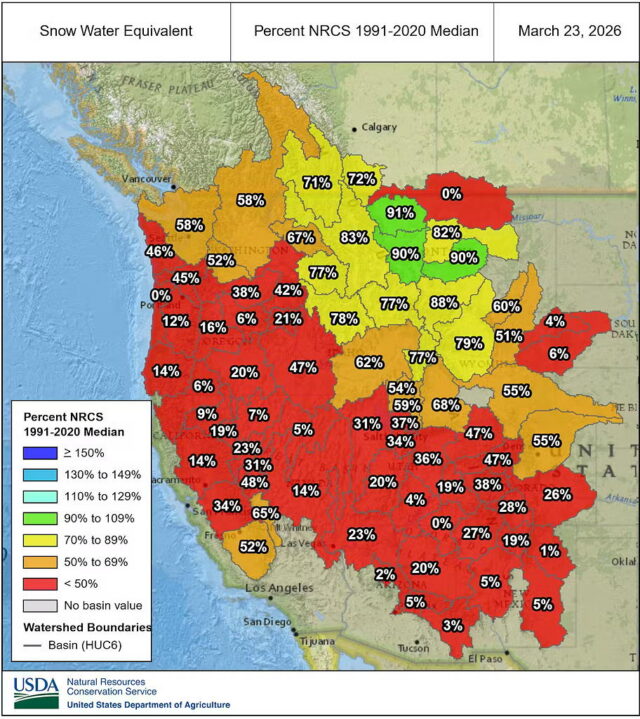 The majority of river basins in the Western US were at less than 50 percent of their 1991–2020 median snow water equivalent on March 23, 2026.
Credit:
The majority of river basins in the Western US were at less than 50 percent of their 1991–2020 median snow water equivalent on March 23, 2026.
Credit:
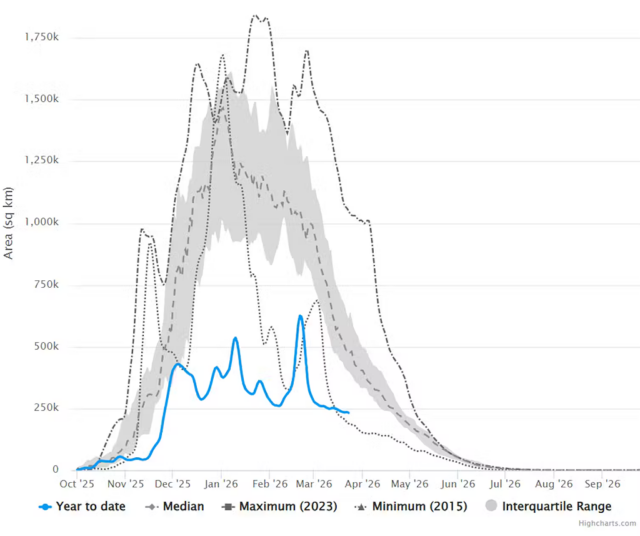 The total area of the Western US with snow cover has been exceptionally low compared to the years 2001 to 2025.
Credit:
The total area of the Western US with snow cover has been exceptionally low compared to the years 2001 to 2025.
Credit:
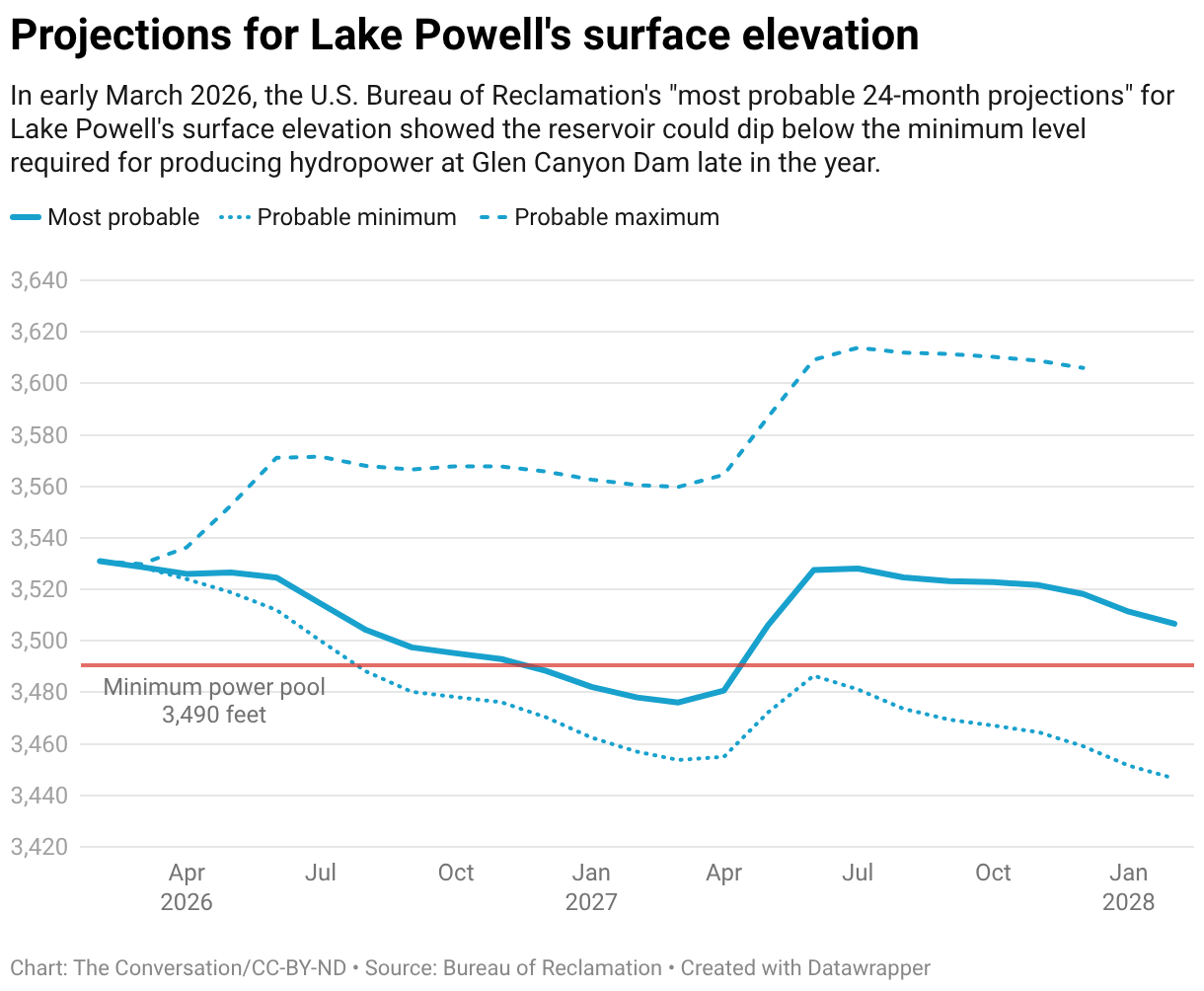 Credit:
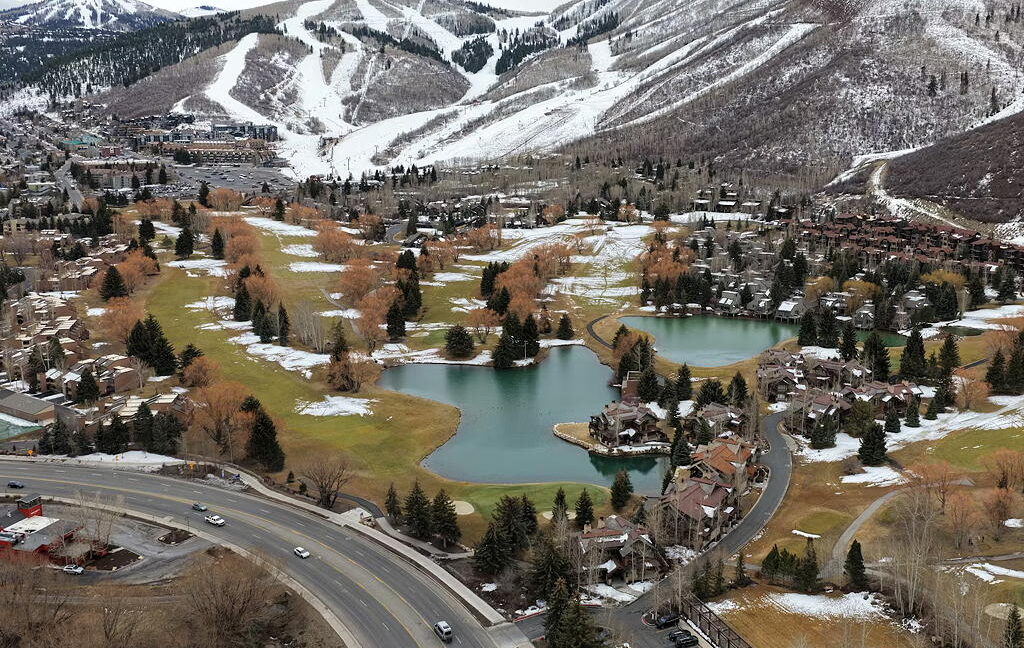

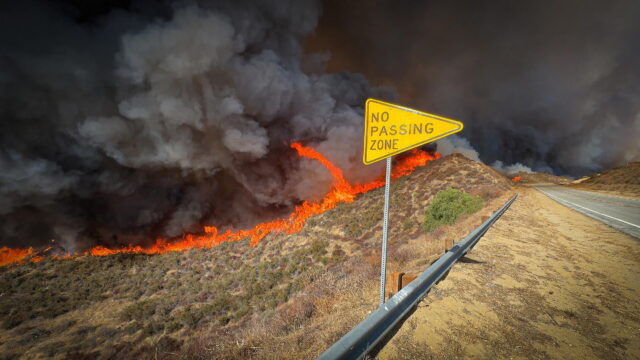 The Hughes Fire burns along Lake Hughes Road in Los Angeles County on Jan. 22, 2025.
Credit:
Andrew Avitt/USDA Forest Service
The Hughes Fire burns along Lake Hughes Road in Los Angeles County on Jan. 22, 2025.
Credit:
Andrew Avitt/USDA Forest Service
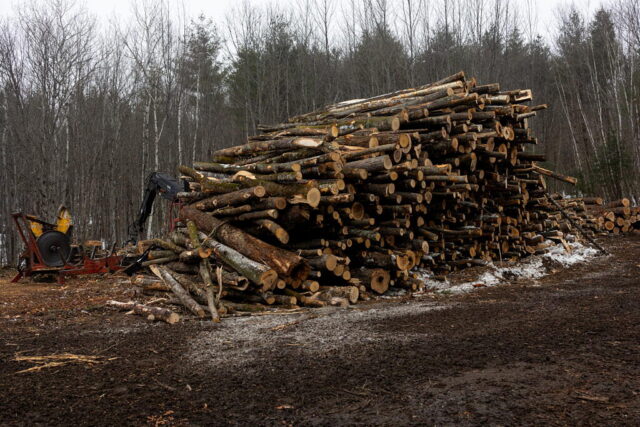 A logging operation is seen in New Hampshire’s White Mountain National Forest on Dec. 17, 2023.
Credit:
Andrew Lichtenstein/Corbis via Getty Images
A logging operation is seen in New Hampshire’s White Mountain National Forest on Dec. 17, 2023.
Credit:
Andrew Lichtenstein/Corbis via Getty Images