I’m no sociologist, but it feels like eating in the car is one of the most American things a person can do. From nostalgic drive-ins to omnipresent drive-throughs, the car and food have long shared a link. While Kirby’s Pig Stand pioneered the concept of four-wheeled dining, In-N-Out’s introduction of a drive-through two-way speaker system laid the blueprint for grabbing a bite on the road. However, without a tray, eating in a car can be messy. Before the fold-out armrest table in the Ford F-150, before the Fisker Ocean’s taco tray, there was the fourth-generation Toyota 4Runner and its clever pair of little tables.
It’s no surprise that some foods are easier to eat on the go than others. A couple of years ago, we ran a test of the best and worst foods to eat while driving, and it shouldn’t be surprising that say, a McDonald’s cheeseburger fared a lot better than biryani. Really, eating anything behind the wheel is a bit distracting, so the safest way to grab a bite in the car is to park up. However, depending on what you’re eating, you’ll want room to spread out, and Toyota thought of this.
The fourth-generation 4Runner was a landmark model in many ways. It was the first and only 4Runner to be offered with a V8, the first 4Runner to feature available third-row seats, and the first 4Runner to offer hydraulically interlinked dampers. However, the real innovation we’re talking about today is a pair of elements that enhanced everyday quality of life.
Photo credit: Cars & Bids
If you look carefully at the lid of the center console, you’ll notice a horizontal gap running across it. Subtle, but if you fold the front section of the console lid towards the front of the vehicle, you reveal a modestly sized flat surface. Textured to provide a little bit of grip and about the right size for a Whopper, this little touch meant owners didn’t have to eat their fast food out of their laps. Sure, a maximum rated capacity of 2.2 pounds isn’t enormous, but it should be enough for a regular slop bowl or even a KFC Double Down. That’s a huge deal in the realm of in-car dining.
Even better, rear seat passengers weren’t left without a tray of their own, provided there was nobody in the middle seat, and the 4Runner in question wasn’t equipped with a third row. Tucked away beneath the armrest-mounted slide-out cup holders sat a slide-out tray, built mightier than the one up front. This tray was rated to support 4.4 pounds, which meant it could take the weight of even an enormous burrito.
Image credit: Toyota
Of course, the second-biggest challenge to eating in a car beyond preventing bits of food from getting everywhere is having a tidy place to store any leftover packaging. Unsurprisingly, Toyota thought of that too. On the back of the center console sat this fold-out hoop with a couple of hooks in it, which seems strange until you approach it with a plastic bag. Yep, it’s a trash holder, and the handles of a plastic bag are meant to fit in the hooks of the hoop. This way, you should be able to avoid having a McDouble wrapped with a melted glob of cheese on it slide deep beneath the front seats to the point where it’s smelled before it’s seen. Oh, and the requirement of a plastic bag prevents any weird residue issues the little bin in the later Volvo XC40 might invite.
Photo credit: Toyota
So, shoutout to the 2003 to 2009 Toyota 4Runner for its contributions to the act of dining on the go. While I’d still choose a picnic blanket and a scenic vista whenever convenient, a tray or two does sound nice when it’s absolutely pelting down with rain or snow and the nearest dining room isn’t exactly a place you’d like to be.
Prior to World War II the vast majority of telescopes built around the world were funded by wealthy people with an interest in the heavens above.
However, after the war, two significant developments in the mid-20th century caused the burden of funding large astronomical instruments to largely shift to the government and academic institutions. First, as mirrors became larger and larger to see deeper into the universe, their costs grew exponentially. And then, with the advent of spaceflight, the expense of space-based telescopes expanded even further.
But now the tide may be turning again.
On Wednesday evening, former Google CEO Eric Schmidt and his wife, Wendy, announced a major investment in not just one telescope project, but four. Each of these new telescopes brings a novel capability online; however, the most intriguing new instrument is a space-based telescope named Lazuli. This spacecraft, if successfully launched and deployed, would offer astronomers a more capable and modern version of the Hubble Space Telescope, which is now three decades old.
A billionaire with a keen interest in science and technology, Schmidt and his wife did not disclose the size of his investment in the four telescopes, which collectively will be known as the Schmidt Observatory System. However, it likely is worth half a billion dollars, at a minimum.
"For 20 years, Eric and I have pursued philanthropy to seek new frontiers, whether in the deep sea or in the profound connections that link people and our planet, committing our resources to novel research that reaches beyond what might be funded by governments or the private sector,” Wendy Schmidt said in a statement to Ars. “With the Schmidt Observatory System, we're enabling multiple approaches to understanding the vast universe where we find ourselves stewards of a living planet.”
Essentially the Schmidts have taken innovative telescope concepts that scientists have proposed for government funding and will provide the money needed to build them. Their gift has enormous potential to advance the study of astronomy and astrophysics.
Deep blue
Named for the deep sky blue of the rock Lapis lazuli, Lazuli is an optical space telescope with a mirror diameter of 3.1 meters (by comparison, the primary mirror of the Hubble Space Telescope is 2.4 meters). It is intended to launch as early as late 2028 and begin scientific operations in 2029.
There are some notable differences between Hubble and Lazuli, starting with the orbit. Lazuli will be located much farther from Earth, in an elliptical orbit with an apogee of 275,000 km and a perigee of 77,000 km, the latter distance about twice as high as geostationary orbit. This will afford the telescope a much clearer view than Hubble, located about 500 km above Earth and increasingly affected by the passage of Starlink and other communications satellites in its observations. At this higher altitude the Lazuli team believes it can maintain control of the telescope at all times and have a rapid data downlink.
“We sit on decades of technological developments since Hubble,” said Arpita Roy, lead of the Astrophysics & Space Institute at Schmidt Sciences, in an interview. “Lazuli is a very modern take on Hubble, with a larger mirror, swifter response, and different instruments.”
The instruments are a wide-field camera, a spectrograph, and notably, a coronagraph to blot out the light from stars to reveal the atmospheres and other details of exoplanets orbiting them.
Some specs on the Lazuli space telescope.
Credit:
Schmidt Observatory System
Schmidt Sciences will act as the overall integrator and manager of the Lazuli project. The president of the philanthropic organization, Stuart Feldman, said he was not ready to disclose the telescope’s primary contractors yet. But he said a key goal of this telescope, and the other three projects, is to move quickly. Moving from a telescope concept to launching hardware in less than five years would be rapid indeed.
Feldman said in an interview that the major space telescopes planned, built, and launched by NASA have tended toward 25-year gestation periods. It is common today for an astronomer to design instruments on observatories that will only be used by their graduate students upon nearing retirement. Moving expeditiously should also better control costs.
Feldman said he had “moderate-high confidence” that deploying and operating Lazuli would be a success. “We are taking far more risks than NASA would be willing to do,” he acknowledged. “But we are doing things rigorously, and aiming for a very high probability of success.”
No privately funded observatory remotely close to Lazuli’s scope has ever been launched into space. If successful, it would be, in many ways, historic.
On the ground
The other three telescopes that will be funded by the Schmidts will be based on the ground, in the southern and western United States, but they are no less innovative than Lazuli. All three of the proposed telescopes are modular and take advantage of recent advances in computing power, storage, and AI processing and analyzing data.
They are:
Argus Array: This is an array of 1,200 telescopes with 11-inch mirrors, likely located in Texas, to mimic the effect of an 8-meter optical telescope. It will image the entire Northern Hemisphere sky. Managed by the University of North Carolina, with a company called Observable Space building the telescopes, the Argus Array will be co-funded by the Schmidts and a Russian-born British financial trader named Alex Gerko. It will produce an image every second and capture objects as faint as the 18th or 19th magnitude, Feldman said. Enticingly, it will essentially be able to generate movies of the night sky, allowing astronomers who observe a supernova or other interesting object to rewind 30 minutes, or two hours, to see what happened leading up to the explosion.
DSA radio telescope: This will be an array of 1,600 radio dishes, each with an antenna of about 6 meters, located in a valley in Nevada. It is far less expensive to fill a valley with these smaller antennas than to build a single Arecibo-size radio telescope. This project will be managed by the California Institute of Technology and fully funded by the Schmidts. The radio dishes will feed an enormous amount of data and require processing faster than Netflix’s global data stream currently does to map over a billion radio sources in the universe. It will aim to produce a picture of the sky every 15 minutes.
LFAST: This instrument will conduct scalable, large-aperture spectroscopy. Likely based in Arizona, a prototype could be deployed by mid-2026. It will contain 20 80cm mirrors in a single rack to provide the equivalent observational power of a 3-meter telescope. Among its capabilities will be to search for biosignatures on other worlds, and it is designed to be expandable over time. It will be led by the University of Arizona and fully funded by the Schmidts.
Modular and affordable
The design of each telescope selected for the Schmidt Observatory System feels very modern. Their designs are enabled by recent developments in the miniaturization of electrical components, more powerful computers, artificial intelligence, lower-cost launch, and other trends.
These telescopes could probably not have been built even five years ago. Feldman said the storage for some of the ground telescopes requires petabytes. AI will be crucial to poring over all of this data to uncover new and novel observations. And prior to the current class of commercial heavy-lift rockets, a telescope had to scrimp on mass and power; but now, with cheaper and brawnier launch, it’s easier just to throw more solar cells on an instrument.
The plan is to freely and openly share data from the telescopes. The Schmidts have emphasized that this is not a commercial project in any way. They will not be selling time on the telescopes. Rather, there will be an open competition for the best scientific ideas and observations to make.
“We are basically providing a gift to the global astronomical community,” Feldman said. “We wish the data to be openly available for all of the instruments.”
The Schmidts’ approach also includes tapping into emerging commercial space companies, such as Observable Space, which is building the Argus Array telescopes.
"The Argus Array's commitment to open data and open science represents a new model for how astronomical discovery should happen," Dan Roelker, CEO of Observable Space, said. "We're excited to partner with the University of North Carolina and Schmidt Sciences to build the more than 1,200 telescopes designed not just for today’s questions, but for discoveries we haven’t imagined yet.”
The Schmidts have been reticent to speak about costs, but Feldman acknowledged that building and launching a space telescope will easily cost in the “hundreds of millions of dollars.” And that’s just one of the four telescopes.
“Putting up a whole valley filled with 20-foot antennas is not child’s play either,” he said. “This is a very significant contribution to astronomy.”
I am in the handful of people who think this is a low key symbol of how terrible this country has become. It's pure evil that one person can launch a telescope into space. This is a clear sign that someone has too much wealth
Donald Trump on January 6, 2026 in Washington, D.C. (Photo by Alex Wong/Getty Images)
THE EDITORIAL BOARD OF THE Wall Street Journal has delivered its share of idiocies over the past few years, but its response to the capture of Nicolás Maduro has set a new standard. Calling the military intervention “justified” because Venezuela had allied with “Russia, China, Cuba, and Iran,” the board then declared triumphantly that “Mr. Trump is pursuing the Bush freedom agenda, at least in the Western Hemisphere. Are we all neocons now?”
Also living in a dream world is Sen. John Fetterman, who told Fox News that “We all wanted this man gone, and now he is gone. I think we should really appreciate exactly what happened here.” Fetterman then offered a benediction, saying that he just wanted to “remind everybody that America is a force of good order and democracy, and we are promoting these kinds of values. We are the good guys.”
That’s delusional, and I say that as someone who believed in humanitarian interventions abroad, who supported the Gulf War, the Iraq War, the bombing of Serbia, and the invasion of Grenada. American power has been used for bad ends at times (the Mexican War was unadulterated aggression), but it’s hard to think of a country that has more often extended itself for good purposes around the globe. We had losses and failures—South Vietnam, Afghanistan, Libya—but tens of millions of people in places like Taiwan, Germany, South Korea, Kosovo, Kuwait, Bosnia, and, yes, Iraq owe their freedom and prosperity to American arms. Hundreds of millions more live free from oppression only because the United States armed them against aggressors or threatened to use force if they were attacked. Damn right we were the good guys! As Colin Powell put it in 2003: “We have gone forth from our shores repeatedly over the last hundred years . . . and put wonderful young men and women at risk, many of whom have lost their lives, and we have asked for nothing except enough ground to bury them in.”
To imagine that Trump is doing anything remotely like those interventions in Venezuela is risible. “Good order and democracy”? At his strutting press conference, Trump mentioned the country’s oil more than twenty times and democracy not at all. Asked later whether the United States would encourage elections, Trump dismissed the idea: “We have to fix the country first. You can’t have an election. There’s no way the people could even vote.” Would a “freedom agenda” president beat his chest and roar that “American dominance in the Western Hemisphere will never be questioned again”?
We’d like to have better politics in this country, but in the meantime, we’re building a better kind of community. Join us.
That press conference was not about democracy or human rights or even capitalism. It was about straight up plunder undergirded by threats. The country’s oil, Trump announced, would be pumped by American oil companies for American oil companies—not even for American taxpayers. The welfare of Venezuelans is, at best, an afterthought, if that. Trump’s eyes sparkle at the prospect of looting another country’s natural resources. His lone complaint about the first Gulf War was that we failed to “take the oil.” He has shaken down Ukraine for its rare earth minerals, and he is casting lascivious glances Greenland’s way. But sure, it’s a freedom agenda.
Venezuela was—and is—worthy of rescue. Once the wealthiest nation in South America, and among the wealthiest in the world, populist leftist governments under Hugo Chávez and Nicolás Maduro have reduced it to a basket case in which 91 percent live in poverty (67 percent in extreme poverty) and a quarter of the population has fled. Chávez came to power promising to share the nation’s oil wealth with the poor and middle class, but instead delivered poverty to nearly everyone. And not just poverty, but corruption, crime, repression, and torture.
In the past, when the United States has toppled dictators, it has sought plausible leaders from among the democratic opposition, and sometimes settled for less than inspiring choices like Hamid Karzai and Nouri al-Maliki. But as Larry Diamond noted, “Despite the viciousness of the Venezuelan regime, the country’s political opposition has repeatedly mobilized, against daunting odds, for a peaceful transition to democracy.” Not only is the Venezuelan opposition unusually united and organized; not only does it have a legitimate president in Edmundo Gonzàlez; but it has a clear leader in María Corina Machado, who happens to be a global heroine and Nobel Peace Prize winner.
As Machado recounted in her Nobel acceptance speech, the opposition was particularly inspired in 2024:
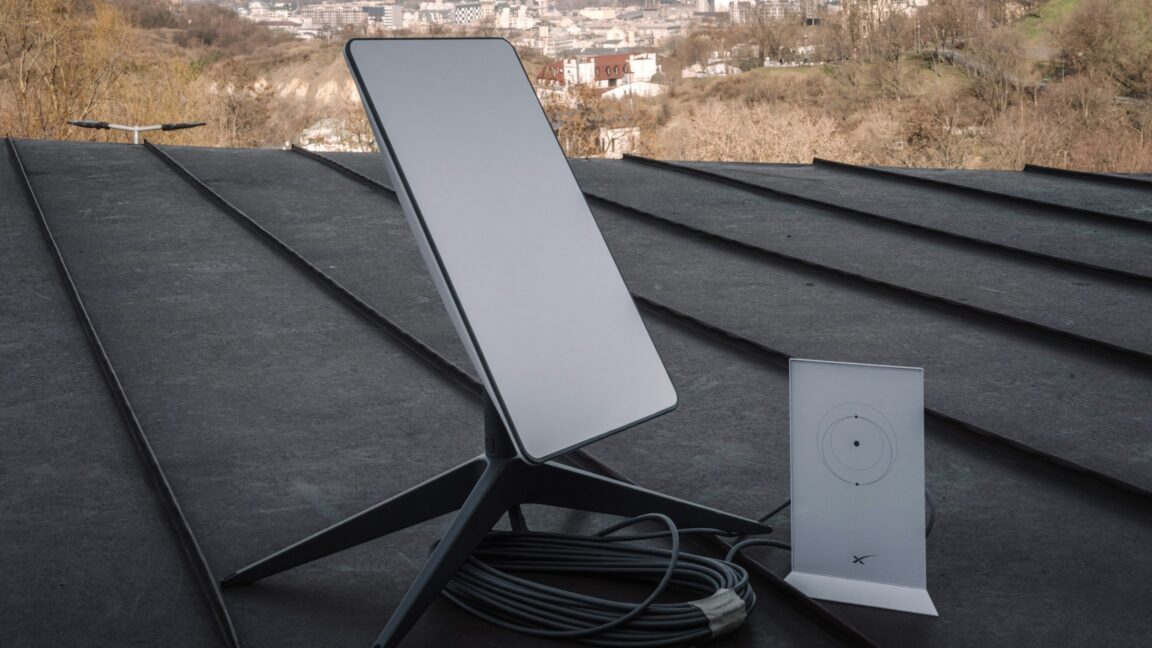
600,000 volunteers across 30,000 polling stations; apps to scan QR codes, digital platforms, diaspora call centers. We deployed scanners, Starlink antennas, and laptops hidden inside fruit trucks to the furthest corners of Venezuela. Technology became a tool for freedom.
Secret training sessions were held at dawn in church backrooms, kitchens, and basements, using printed materials moved across Venezuela like contraband. . . .
And then the electoral tally sheets—the famous actas, the sacred proof of the people’s will—began to appear: first by phone, then WhatsApp, then photographed, then scanned, and finally carried by hand, by mule, even by canoe.
They arrived from everywhere, an eruption of truth, because thousands of citizens risked their freedom to protect them.
The opposition won that election with two-thirds of the vote, though Maduro refused to recognize his loss (sound familiar?) and held on to power. There is no need to search for plausible democratic leaders. They are right there, in plain sight, begging to reclaim their nation. But Trump has no interest in that. He dismissed Machado as unable to lead. “She’s a very nice woman, but she doesn’t have the respect.”
How can the Wall Street Journal editorial board and others credit the idea that Trump is pursuing some sort of freedom agenda when he has rejected the clear democratic leader of the country and the winner of the last election, and instead chosen to work with Maduro’s Marxist vice president, Delcy Rodríguez?
Well, “work with” needs some clarification. He has chosen to designate a strongman (woman, in this case) whom he can push around. Rodríguez, he told reporters, is “essentially willing to do what we think is necessary to make Venezuela great again.” And if not? “If she doesn’t do what’s right, she is going to pay a very big price, probably bigger than Maduro.”
Maduro was kidnapped and imprisoned, so “bigger” than that fate would seem to be a death threat. Still think we’re the good guys, Sen. Fetterman?
And while we’re on the subject of virtue, Trump and his people don’t leave any doubt that they are in the business of intimidation and possible conquest. Marco Rubio warned other leaders not to “F around” lest they find out what a bad hombre the president is. There were direct, bald threats against Cuba, Colombia, Mexico, and of course, Greenland.
Trump has hardly bothered to offer a reason for his intervention in Venezuela, and when his team has come up with some, they don’t bear scrutiny. Was it drugs? That seems unlikely since Trump just issued a pardon to Juan Orlando Hernández, former president of Honduras, who was convicted of drug running. Was it communism? Not if Trump is content to leave the regime intact. Was it immigration? Not when the Trump camp is forgoing a clear chance to restore democratic stability in that country, which would reduce emigration.
The sheer pleasure of bullying seems to be the likeliest explanation, but here again, Trumpland is another planet. None of the reasons that Venezuela is truly guilty seem to interest Trump, but he’s obsessed with the fantasy that they somehow emptied their prisons and insane asylums and shipped the inmates to America.
Back in 1980, when Trump was just a novice charlatan, Fidel Castro did something like that during the Mariel Boatlift. Trump got that idea stuck in his brain and spews it about every country he dislikes. During the 2024 campaign, he falsely claimed that Venezuela’s crime rate had dropped because they dumped all of their criminals in the United States. It’s deranged.
The United States under Trump is an outlaw nation, threatening excellent neighbors like Canada with economic devastation, blasting people in fast boats to pieces, withdrawing from international agreements, bullying friends and foes alike, and now kidnapping foreign leaders (however evil). We are becoming the kind of nation against which America used to defend others.
I have mixed feelings about some of The Bulwark’s writers but they have correctly recognized the moment in a way which mainstream journalism largely has not.