For years, Microsoft and OpenAI have fought to keep certain information out of the public eye in their fight with news organizations that have accused the AI firms of teaming up to violate copyright laws by stealing tons of news content to train AI.
However, now the details that should never have been marked confidential are starting to leak. In a motion for summary judgment that was unsealed Thursday from news plaintiffs led by The New York Times, internal documents are exposed that news groups alleged show exactly how Microsoft and OpenAI viewed the threat to news before unleashing new AI products like ChatGPT and Copilot.
Perhaps most explosively, Microsoft Director of Applied Science Brent Hecht repeatedly warned in documents that scraping news for AI training was “an astonishing theft of unprecedented proportions,” calling it perhaps the “largest theft of labor in human history,” news orgs said. In another document, Hecht contradicted Microsoft and OpenAI’s argument that training AI on news content is fair use, suggesting that the plan to widely scrape news made “a complete mockery of the idea of ‘fair use.’”
Over at OpenAI, ChatGPT head Nick Turley wrote in an internal message that publishers would face an “existential threat” from commercial products trained on news content that can be used to substitute news providers. One Microsoft document even described a “doom loop,” news orgs said, “that will hurt the performance of our models and the entire web at the same time.”
“It is highly unusual that an end-product threatens the economic foundations of its essential suppliers, but that is the situation we have created for our LLM business with respect to its ‘content supply chain,’” that document said.
Data from both firms shows that this prediction was accurate. Microsoft recorded 83–93 percent drops in click-through rates for some news plaintiffs, and 51–94 percent drops for others. Add to that reporting on low click-through rates from ChatGPT search results and news organizations’ own reporting on traffic declines. Suddenly, it becomes easier to see how declining news revenue could ultimately rob chatbots of the abundant streams of reliable information that supposedly makes them such groundbreaking tools.
Meanwhile, “almost no one intended for content they created to be used in this fashion, nor are they compensated for its use,” Hecht acknowledged in a Microsoft document.
News organizations say they’re ready to go to trial because there’s so much “compelling evidence of substitution.” If they can prove that chatbots are replacing them in their own markets, while serving to spit out excerpts of articles verbatim, they think that one-two punch may eviscerate Microsoft and OpenAI’s fair use arguments.
“The future not just of journalism but of responsible AI too depends on preserving incentives for humans to produce the creative works on which a healthy society depends,” news groups argued.
Chatbots are “largely substitutive, period”
Under oath, Microsoft CEO Satya Nadella testified that AI companies shouldn’t be violating news sites’ terms of use by dodging paywalls. But over at OpenAI, internal messages showed that when a staffer, Nick Ryder, informed President Greg Brockman that “a hack” was found for OpenAI crawlers “to get around” the NYT paywall, Brockman replied, “Ah, nice.”
Nadella also acknowledged that chatbots have served as substitutes for news platforms, describing the chatbot as stealing clicks from news sites by “giving you the information right there on the website on the AI platform versus needing to go to the underlying source.”
There’s consensus on that at OpenAI, where a software engineer said in an internal message that “no matter how prominently we show the links, users won’t click.”
OpenAI’s Turley agreed that there is “no good reason to click” when the chatbot provides information, the motion said. He also seemingly suggested that the doom loop was already in motion, describing chatbots as “largely substitutive, period” and predicting that they “will get more and more substitutive as they get better.”
News groups argued that insiders' own statements should be damning.
“With respect to outputs that are substantially similar to training or grounding sources, courts have rejected claims that copying news articles to provide a product that substitutes for demand for news is fair use,” news groups argued.
Microsoft disclaims exec's comments
News groups tried many different tactics to test if Microsoft and OpenAI products would output their news articles verbatim. Their motion shows they went further than early strategies where they would ask chatbots to provide access to entire news stories by repeatedly asking “what’s the next line?”
In some cases, news organizations found that chatbots would generate long excerpts of articles when users requested summaries of articles. Other flagged outputs were generated by asking for key bullet points of articles. Particularly successful were prompts requesting that chatbots “rate the bias” of news articles. Chatbots also reproduced portions of articles if users asked them to pick any article off a certain site’s homepage.
In their motion, news plaintiffs have only asked the court to rule on infringed articles where outputs “demonstrate extensive verbatim overlap,” because they’re confident that the “substitutive purposes of defendants’ copying weigh against fair use.” Legal concerns with other articles will be raised at trial, they said.
OpenAI did not immediately respond to Ars’ request to comment.
However, a Microsoft spokesperson defended Microsoft’s AI products as a transformative fair use that don’t substitute for news sites. The spokesperson said that Nadella’s testimony touched on “broad principles and changes underway in how people find and consume information,” which were merely “observations” that “should not be confused with conclusions about copyright questions before the Court, which Microsoft addresses in its filings.”
Regarding Hecht’s comments, the spokesperson claimed that those documents only “reflect one employee’s individual perspective, are not a legal analysis, and do not represent the company’s views.”
Steven Lieberman, counsel for the New York Daily News and seven of its sister papers, disagrees. He told Ars that “the evidence revealed here for the first time shows that OpenAI and Microsoft knew that what they were doing was wrong.”
“Throughout this case Defendants insisted that these documents be treated as confidential so that the public could not see them,” Lieberman said. “Well, now the cat is out of the bag. Finally, the world can see what OpenAI and Microsoft thought all along about the fairness of their own behavior.”
Microsoft exec described "accidental cover up"
News plaintiffs have argued that regardless of the individual expressing the views, the internal documents make clear that firms anticipated that verbatim outputs would harm news sites. Further, they alleged that instead of preventing the outputs, the firms tried to make it harder for news groups to test chatbots by creating a filter that Hecht suggested could be perceived as an “accidental cover up” because it would result in “people who have a right over the content having less visibility into what was used for training."
News groups are also upset that instead of listening to insiders warning that scraping news was theft, Microsoft and OpenAI never chose to license content, allegedly usurping them in another market in ways they couldn't anticipate.
Specifically, their motion accused Microsoft of violating “industry norms” by selling a dataset purchased for Bing as training data for OpenAI, allegedly doing so without consulting news groups that would not have approved of that repurposing of their consent to basic search engine crawling. Further, OpenAI allegedly “acted improperly” by obtaining a NYT dataset with 1.8 million articles from a third party that was bound to an agreement that the data wouldn’t be used for commercial purposes. OpenAI’s employees knew it “would not be appropriate” to use that data “to train a model,” but they did it anyway, news groups alleged.
For news groups, the problem isn’t just Microsoft and OpenAI, but all the AI firms that are following their lead in "free-riding" on their content, the motion said. Most notably, after ChatGPT’s launch, Google’s AI Overviews was quickly introduced and started absorbing even more traffic that previously went to news sites.
If courts don’t clarify that AI firms must license news content, both news publishers and AI firms could be doomed, news plaintiffs argued. One Microsoft internal document agreed that “there is a ‘real risk’ that GenAI could ‘significantly disrupt’” the “employment of the very people who generated the data on which the foundation model was trained,” they noted. Microsoft even included a cartoon illustrating the problem of LLMs destroying their own supply chains, they said:
“AI companies remain powerless to break out of this ‘doom loop,’ because, while the industry as a whole would benefit if every company paid to sustain the continued production of the creative works their technology depends on, each individual company is better off taking content for free while others pay,” news groups argued.
As evidence of this blind greed, their motion emphasized that Brockman wrote that he was “deeply motivated by the gazillions” that could be gained by commercializing OpenAI’s technology.
“Finding that copying news for AI is not fair use would solve this prisoners’ dilemma by putting all AI companies, OpenAI and Microsoft included, on an even footing,” news organizations said.
This story was updated with a quote from New York Daily News counsel Steven Lieberman.
Photo illustration by ProPublica. Photo by BSIP/Universal Images Group via Getty Images.
The number of women who died after an ectopic pregnancy has spiked in recent years, a ProPublica analysis found. The mounting deaths in Centers for Disease Control and Prevention data have drawn little scrutiny or response.
Such deaths typically occur in the first trimester, after a pregnancy fails to properly implant in the uterus and begins to develop elsewhere, most commonly inside a fallopian tube. The embryo grows until it causes the organ to rupture, triggering catastrophic bleeding.
With prompt and appropriate medical care, maternal health experts say, women should not die. Yet ProPublica’s analysis found a stark and baffling increase: Almost 200 women with the condition died from 2020 to 2025, compared with about 100 in the previous six years.
“A death related to ectopic pregnancy should really be a never event,” said Dr. Alice Abernathy, an OB-GYN in Philadelphia.
Deaths involving an ectopic pregnancy are presented as a rate within three-year intervals to meet data suppression thresholds. Source: ProPublica analysis of CDC WONDER multiple cause of death and natality data.Lucas Waldron/ProPublica
While chaos and access issues at hospitals during the COVID-19 pandemic likely contributed to at least some of the deaths, the surge has persisted, raising serious questions about the role of the most significant disruption to maternal healthcare in the years since: state restrictions on abortion.
To treat an ectopic pregnancy, which is almost never viable, doctors must terminate it. But lawsuits and federal complaints have alleged that some medical providers are hesitating or flat-out refusing to do that in states where they face criminal penalties for performing an abortion. Patients described their terror.
“I genuinely thought I was going to die,” said Kyleigh Thurman, whose right fallopian tube ruptured after she struggled to get ectopic care in Texas in 2023.
“There were a few times I asked my husband if I was going to die,” Leitaea Lowrimore of Oklahoma said in a lawsuit after being denied treatment for an ectopic pregnancy at multiple hospitals in February. “I kept thinking about our kids.”
To determine whether these issues go beyond anecdotes, ProPublica analyzed the data collected from every state by the CDC to look for patterns. The analysis shows a growing divide for women in states with strict abortion bans compared with those without.
While the uptick in ectopic deaths occurred nationwide, the climb has been much steeper in states that banned abortion after the Supreme Court overturned Roe v. Wade in 2022.
Deaths involving an ectopic pregnancy are grouped into three-year periods to meet data suppression thresholds. States with abortion bans that begin at six weeks of pregnancy or earlier are considered to have a strict ban. For the list of states in each group, see the methodology. Source: ProPublica analysis of CDC WONDER multiple cause of death and natality data.Lucas Waldron/ProPublica
ProPublica shared its analysis with more than a dozen maternal health experts, including leaders in the field, who were unaware of the spike; early pregnancy complications are chronically underresearched.
While they cautioned that abortion bans alone can’t explain the national rise, maternal health experts said any examination of the spike should include the documented delays in care caused by the laws, including for ectopic pregnancies.
In Thurman’s case, despite clear signs of an ectopic pregnancy, two emergency departments sent her home without resolving the complication. Regulators in 2025 found that one of the hospitals, Ascension Seton Williamson, failed to properly screen Thurman for a suspected ectopic pregnancy and did not call in an OB-GYN, in violation of the hospital’s own policies and federal law that requires emergency departments to treat and stabilize patients before discharging them. Thurman has an ongoing lawsuit against Ascension Seton Williamson and the other hospital, Ascension Seton Highland Lakes, for medical malpractice.
Thurman had to have her fallopian tube removed after it ruptured. (Thurman is not related to Amber Thurman, who died in Georgia, which also has an abortion ban, after doctors delayed treating different pregnancy complications in 2022.)
“I’ve never been in a situation where I didn’t get healthcare when I needed it,” Thurman told ProPublica, comparing the condition to having “a time bomb you can’t control.”
A spokesperson for the Ascension Seton hospitals said in a statement, “When a patient experiences a serious or life-threatening condition during pregnancy, our clinicians provide medically indicated treatment, including treatment for an ectopic pregnancy.” The hospital has denied Thurman’s malpractice allegations in a court filing.
Ectopic pregnancies, while rare, have long been recognized as the leading cause of maternal deaths in the first trimester. The condition impacts up to 2% of pregnancies in the U.S. Because government agencies don’t require hospitals to track or report overall ectopic diagnoses, it is impossible to know whether the condition itself is becoming more common.
While rates for other pregnancy-related deaths also increased during the pandemic, those climbs have largely subsided.
Experts aren’t sure why ectopic deaths have continued to rise. Ectopic pregnancies are more common among older women, but the increase in deaths has been even more stark among younger women, the analysis showed.
Anti-abortion groups have suggested that the use of abortion pills prescribed online is leading to more undiagnosed ectopics because telehealth patients don’t receive an ultrasound. But studies havefound that ectopic rates are far lower among people who seek medication abortions than in the general population. Telehealth clinics ask questions that filter out patients at higher risk of ectopic pregnancy and follow up with those they treat to screen for symptoms, said Ushma Upadhyay, a researcher at the University of California, San Francisco, who studies telehealth abortion administration.
Experts told ProPublica that more research is required to determine the role of the abortion bans in the rise of ectopic-related deaths. Many states with bans, which generally provide less Medicaid funding and coverage to low-income women, have long had poorer maternal outcomes. “It’s a real challenge to try and tease out one thing out of the array of factors that undermine women’s health in these states,” said Eugene Declercq, a public health researcher at Boston University.
But experts said ProPublica’s data analysis, along with stories about delays in ectopic care, underscores the need to find out what is driving the deaths.
“Reproductive health is unusual across medicine when we consider how swiftly policy changes affect the care patients can receive,” said Dr. Courtney Schreiber, a professor of obstetrics and gynecology.
Caitlin Myers, an economist at Dartmouth College who studies abortion policy, said the deaths should be investigated: “This is a potentially profound consequence of the regulation,” she said.
How Abortion Bans Interfere With Ectopic Care
Many state abortion bans include exceptions for ectopic pregnancies. But experts have worried that doctors are hesitating to offer treatment without an ironclad diagnosis, which clinicians say can take time and increase risks to the mother.
Ectopic pregnancy symptoms often begin with abdominal pain and bleeding, which send women to emergency rooms. There, doctors use ultrasounds to locate where the pregnancy has implanted.
However, embryos are often not visible on an ultrasound early in pregnancy. That could mean the pregnancy is ectopic, but it may also be a miscarriage or normal pregnancy that’s too small to see. Doctors can also assess whether the pregnancy is likely ectopic through blood tests over multiple days.
If the pregnancy is ectopic, the risk of rupture increases the longer treatment is delayed. In a state without a ban, a patient could decide at any point that that risk is not worth taking and opt to terminate the pregnancy.
In a state with a ban, however, that option may not exist. If doctors can confirm the pregnancy is ectopic through an ultrasound, they can protect themselves from having their decision to terminate questioned, perhaps by a zealous prosecutor. But waiting for this can delay treatment by days or even weeks.
“Seeing a mass is not the only reason to have high suspicion for an ectopic pregnancy,” said Dr. Rebecca Nerenberg, an emergency medicine doctor in New York and the clinical director at Access Bridge, which educates ER doctors on reproductive healthcare and has released evidence-based guidelines for diagnosing possible ectopic pregnancies.
Experts say that doctors should be able to offer treatment when other symptoms are present, such as plateauing pregnancy hormone levels, bleeding and abdominal pain. Patients can be treated with a procedure or a cancer drug that stops cells from growing.
But for women in states with abortion bans, getting that treatment can be difficult.
Lowrimore, who lives near the state border in Oklahoma, sought care at an Arkansas emergency department in February after experiencing abdominal pain and significant bleeding. She was sent home and told to return for more tests after being diagnosed with a “pregnancy of unknown location,” because an ultrasound could not show where her pregnancy had implanted, according to a lawsuit.
Lowrimore visited three different hospitals across both states over the following week as she began passing blood clots and the pain intensified, radiating up the left side of her body, according to the lawsuit.
The fact that the states’ abortion bans make exceptions for ectopic pregnancies did not help her, even though doctors acknowledged that was a possible diagnosis. In each visit, they didn’t treat her for that condition. One told her that intervening in her pregnancy could land him jail time — “10 years in the poky,” according to the suit. “I felt like my life was a risk he couldn’t afford,” she said in the lawsuit filing.
After consulting a lawyer, Lowrimore finally drove to a hospital in Kansas, where abortion is legal, and got an injection of the cancer drug called methotrexate within hours of arrival.
Lowrimore’s lawsuit, in which an OB-GYN and six women who were denied care are seeking to block the Arkansas abortion ban, is ongoing. Lowrimore also filed complaints under the same emergency medicine law as Thurman against the three hospitals. Regulators cited Mercy Hospital in Fort Smith, Arkansas, for failing to provide care during the eight hours Lowrimore waited to be seen. The other two hospitals were not found to have violated that law, and they did not respond to requests for comment.
A spokesperson for Mercy Hospital declined to comment on the case, saying that, “in tragic situations when a mother suffers from an urgent, life-threatening condition during pregnancy, Mercy provides all medically indicated treatment to save her life.”
Many experts predicted that ordeals like the ones Lowrimore and Thurman described would occur when abortion bans took effect. To see if more women with ectopic pregnancies are experiencing severe health outcomes, ProPublica analyzed hospital data from Texas, the most populous state to ban abortion.
In this new analysis, ProPublica found that 310 more patients in Texas experienced substantial blood loss after an ectopic pregnancy in 2023 and 2024 compared with 2018 and 2019, an increase of about 29%. Similar to ectopic deaths, the rise appeared to begin during the COVID pandemic, but the rate of complications remained elevated after hospital systems stabilized and the state passed its restrictive law. ProPublica is working to acquire similar data from states without abortion bans.
But new guidance from the Texas Medical Board includes only a case study with an ectopic pregnancy that can be seen in an ultrasound, remaining silent on the difficulty of early ultrasounds to detect where a pregnancy has implanted. This leaves open the possibility that a prosecutor could question whether such a case was really ectopic, in a state where doctors face up to 99 years in prison for performing illegal abortions.
A spokesperson for the Texas Medical Board said the course is not intended to cover all scenarios and that it “explains that imminent harm is unnecessary and specifically states that physicians who follow evidence-based medicine, standard emergency protocols, and proper documentation face minimal risk.” Asked whether a conclusive ultrasound image is necessary for an ectopic diagnosis, the spokesperson said, “The Board has consistently stated that providing commentary on every possible situation would be impractical.”
But Michelle Maloney, an attorney who represents Thurman and 13 other Texas women or their families who say they were denied care — including seven with ectopic pregnancies — said she still gets frequent calls from women who say they were denied care for pregnancy complications. “I don’t think specific exemptions address the massive gray areas that arise in pregnancy,” she said.
Solutions are unlikely to come from the states themselves. A previous ProPublica investigation found that states with strict bans are not studying whether their laws are contributing to maternal deaths. And others have not followed Texas in attempting to amend their bans.
Gaps in Research, Training and Awareness
One of the biggest challenges to reducing ectopic pregnancy deaths nationwide is the lack of awareness, research and data.
No one, for example, is tracking whether women who experienced ectopic pregnancies also had one or more common risk factors, like a history of ectopic pregnancies, infertility or use of hormonal intrauterine devices, according to ProPublica’s review of maternal health statistics and interviews with experts.
Nor has any published research addressed the connection between recent ectopic pregnancy death rates and untreated infections like gonorrhea and chlamydia, which increased substantially during the first years of the pandemic before declining again. Those infections can cause pelvic inflammatory disease, which causes fallopian tube scarring and raises the long-term risk of developing an ectopic pregnancy.
It is unclear why the CDC and other federal agencies across two administrations have failed to publicly respond to the increase in deaths despite having access to the same information ProPublica analyzed. But experts say the country’s capacity to respond to it has been greatly reduced under President Donald Trump.
Robert F. Kennedy Jr., secretary of the Department of Health and Human Services, told Congress in April that improving maternal health outcomes is a priority. But the Trump administration has eliminated much of the staff devoted to researching the topic and cut hundreds of millions of dollars in government funding for healthcare research.
The CDC’s Division of Reproductive Health, for example, lost most of its 100 employees, according to a lawsuit filed by more than a dozen states’ attorneys general last year. The entire team that ran the Pregnancy Risk Assessment Monitoring System, a significant source of data for state and local governments as well as maternal health researchers, is on paid administrative leave. That includes many researchers who would have been responsible for investigating the rise in ectopic pregnancy deaths, according to current and former CDC employees.
“You’re losing the capacity to know what’s going on with pregnant women,” Lee Warner, the former chief of the Women’s Health and Fertility Branch at the CDC, said of the cuts at the division. “It’s going to take decades to build this capacity back.”
Funding cuts have also impacted efforts to raise awareness about the condition. Because ectopic pregnancies usually cause complications before standard prenatal care begins around 10 weeks, patients often rely on emergency departments, where doctors don’t typically have specialized training in pregnancy care. Experts say more training on high-risk early pregnancy conditions could help combat rising maternal mortality rates.
The CDC in 2025 also stopped funding a partnership with the American College of Obstetricians and Gynecologists to educate emergency medicine doctors about reproductive healthcare. The initiative, “Obstetric Emergencies in Nonobstetric Settings,” offers resources for emergency departments on caring for pregnant patients with cardiovascular disease, hypertension and eclampsia. An ACOG spokesperson said its foundation now funds the project, and that the organization is working on a set of guidelines for diagnosing and managing tubal ectopic pregnancies in the emergency department.
A spokesperson for HHS said the agency continues to track maternal mortality trends, investigate their causes and provide funding for research. “This important work is being accelerated across the Department to support healthy mothers, healthy babies, and strong families,” the spokesperson said.
The United Kingdom’s response to a similar spike in ectopic deaths during the pandemic shows just how much the U.S. is failing to do.
Researchers and officials there identified a surge in deaths in 2021 and 2022 in the U.K. and Ireland; 12 women died of an ectopic pregnancy during those years, which, as in the U.S. during this period, represented a near doubling of the death rate compared with previous years.
They investigated the causes and found a range of culprits, including overstretched emergency services and inadequate early pregnancy screenings, says Marian Knight, a professor at the University of Oxford who leads the U.K.’s maternal mortality reporting.
In 2024, Knight co-authored a maternal mortality report that focused on those deaths and offered policy recommendations. Knight worked with policymakers and a U.K. charity to raise awareness and help doctors and the general public recognize ectopic pregnancy symptoms. Officials also changed how patients experiencing ectopic pregnancy symptoms are prioritized when they call for an ambulance, leading to faster response times.
But the first step, said Knight, was identifying and investigating the issue. “If we’re not tracking and not just understanding the numbers, but understanding the why behind the numbers, we have no ability to respond,” Knight said.
The U.S. doesn’t do national maternal mortality reviews, said Boston University’s Declercq, who serves on the Massachusetts Maternal Mortality and Morbidity Review Committee. Instead, CDC epidemiologists review death and birth records to establish accurate national totals of pregnancy-related deaths, largely leaving state and local maternal mortality committees to take an in-depth look at individual cases and make recommendations to lawmakers and medical providers.
Declercq said his committee has not identified a notable increase in deaths from ectopic pregnancies in Massachusetts in recent years. In most states, these deaths are sporadic enough that they don’t, in isolation, show a notable trend.
It’s only at the national level that this increase in avoidable deaths becomes visible.
ProPublica’s analysis “raises concern that young women are dying from a preventable cause at an increasing rate,” Schreiber, the professor of OB-GYN, said. “That is not what we should be seeing in the United States of America.”
Look at that, I went two whole days without doing a Citroën-focused Cold Start! Should I get a medal? I should probably get a medal. Who do I talk to about that? Should I, like, call my congressman or governor or town alderman or something? I guess I’ll slap my valet awake and demand he get this all sorted, stat. Anyway, my streak of plural numbers of days is over, because there’s another Citroën I want to talk about! And this one was never released!
So, we’re all familiar with Citroën’s famous corrugated shed on wheels, the H-Van, right? Sure we are. It’s one of the best examples of utilitarian design in the whole Automotive Expanded Universe, I think. Even though we never got these in America, there’s more than a few of them around, often converted into coffee or food trucks. Hell, there’s companies that specialize in just that!
Anyway, if you forgot what they look like, here’s a picture, in both pickup and van forms:
Image: Citroën
I think this picture also gives you a sense of the size of these vans, too; not particularly huge, but not tiny, either.
Now, what I never realized is that Citroën considered a smaller version of the H Van at one point, calling it the G Van. The H Van was released in 1947, right after the war, and development had started on it as early as 1942. Citroën seemed to understand, with some optimism, that the war would eventually end, and when that happens people would need commercial vehicles once again, so best be ready.
Citroën used the running gear from their popular Traction Avant car for the H Van, a 1911cc inline-four liquid-cooled FWD drivetrain, though where on the Traction Avant the transaxle was ahead of the engine, in the van application they flipped that around so the engine was ahead of the transmission, which fit the space better under that stumpy hood.
Right around the same time, Citroën was also finalizing development of the 2CV, their small peasants’/peoples’ car that had been in the works since the late 1930s, and would be officially released in 1948, with a tiny 375cc air-cooled flat-twin making all of 9 horsepower. All this we know! What I didn’t know what that Citroën was also considering a smaller sibling to the H Van, based on the drivetrain of their new 2CV! This was the G Van.
Image: Citroën
The G Van, as you can see by that guy standing next to it, was quite small, at least for a commercial van. It shared the same basic design philosophy as the larger H Van, which is to say none, save for a liberal use of corrugated metal and a ruler. One notable and interesting detail is how the grille area is actually just a pair of flat recessed stampings in the bodywork, and not really a grille at all. since there was no tall radiator needed, no huge grille area was needed, with the low-mounted air-cooled engine getting all its air from that slot above the bumper.
Image: Citroënvie
If you look at diagrams of the G Van, you can see the clever and highly space-efficient way it was laid out: the 2CV engine – in this case bored out to a ravenous 475cc – sat low and between the front seats, just ahead of the front axle, essentially how it is in the 2CV.
The chassis and suspension are very 2CV-derived, but beefed up a bit and using torsion arms for springing. If you compare these drawings to similar blueprints of the H Van, you can see just how much smaller it really was:
Image: Citroën
The length of the cargo area of an H Van was about 95 inches (2430mm); on the G Van, it was closer to 78 inches (1810mm). That’s a good bit smaller.
Images: Citroën
Even though it was smaller, it would have been a pretty effective little commercial van, being almost a box on wheels with lots of unimpeded cargo space. Really, the 2CV-derived commercial vehicle that Citroën eventually did build, the AK/AZU Fourgonette, proved to be longer and have significantly less cargo space than the unrealized G Van:
Image: Citroën
With the Fourgonette, Citroën kept the standard 2CV body up to the B-pillar, meaning that there was all that hood area that couldn’t be used for cargo. The G Van sat the driver atop the front wheels, freeing up so much more cargo space behind.
Image: Wikimedia Commons
The lone complete prototype still exists, and is in the collection of the Conservatoire Citroën, The Private Museum Collection, in Paris. If it wasn’t for that solid false grille, it would be almost impossible to tell the difference from this and an H Van at a distance. I suspect when you got close enough, the size difference would either make it clear, or convince you that you just grew a bit.
Time is a fickle beast. One day you’re light-heartedly taping bacon to your cat as a way to procrastinate from writing a novel, causing a viral sensation that briefly makes your site one of the most popular destinations on the entire Internet, and the next it’s twenty years later and that moment is nothing more than deep lore from an earlier age of the online world, as far away from you now as Falco’s “Rock Me Amadeus” was from the day you adhered a pork product to a domestic animal. What a wild, strange turn of events that all happened to be. It couldn’t be predicted. That’s what made it fun.
Twenty years on it really is difficult to explain to anyone who was not there for the moment how silly and popular “Bacon Cat” has, and how, literally for years, when anything bacon-related happened on the Internet, I would get a flood of emails sent to me, most of them beginning “I know this has probably been sent to you a million times, BUT…” It’s no joke that for a while there I was better known for taping bacon to my cat than I was for anything else I did, including writing books. That moment is thankfully over — people do know me more for my books now, although I do also currently have a reputation for questionable burritos — but it was real, and it happened. There are worse things to be known for on the Internet.
For those of you new to this whole “bacon cat” thing, I wish to assure you that it happened only once, no animals (other than the one that provided the bacon) were harmed, and that Ghlaghghee, the cat who was catapulted to Internet fame, was entirely unfazed by it all, even when she was featured in the New York Times, and the paper of record sent a photographer over for a shoot. She lived a long life, happily oblivious to her fame. No worrying about her glory days, just lots of naps. Honestly, a lesson for us all when we achieve our fifteen minutes of fame.
Also, if you were here for the Bacon Cat nonsense back in the day, I’m sorry I just made you feel old. Relatedly, now is a fine time to schedule your colonoscopy if you have not already done so.
Speaking of things that actively denote the passage of time, today is also the 28th anniversary of Whatever, the blog you are reading right now. Whatever is definitively one of the longest-running personal blogs in the world, although one must acknowledge that the “blogosphere” is but a shadow of what it used to be in terms of size and interest… until, that is, one starts to think on all the writers (particularly journalists, a job I myself used to have) who have now posted up to Substack or Ghost or Beehiiv, or who have started an email newsletter or whatever, because mainline journalism is being private equity-ed to death and all the journalists who were laid off still want to be able to eat. Yes, the blogosphere is back, I say, in a new, and perhaps slightly more economically desperate form. Don’t necessarily expect any of the Substackers to agree with me on this, however.
I have railed before, more than once, about the importance of writers and other creative types to have their own space on the Internet, so that when their favorite social media site disappears, or falls into the hands of a nefarious cryptofascist billionaire, or has some other terrible fate befall it, they will still have a place online where people can find them, not beholden to the whims or exigencies of someone else. Whatever has seen the rise and fall of many iterations of social media, and, provided I am not hit by a bus or eaten by a bear, will likely continue to do so. Empires rise and fall, my humble word shop on the side of the virtual road persists.
And yet changes just a little over time, because, of course, now Athena is here as well, posting her own stuff and building her own audience with her own interests and thoughts. I like what Whatever is with her here. She and Whatever came into being in the same year, you know. 1998 was a good year for all sorts of reasons.
Every year I use this anniversary as a check-in for myself to see if I am still interested in writing here, and this year, as with all the years previous, the answer is yes. I think I will keep at it. I like having my own place in the world, where, even now, there is a chance to delight and amuse people, or make them think, or, at least, give them a familiar place to check in on as they wander around the online world. There will never be another Bacon Cat moment (at least, none of my current cats would tolerate being draped in cured meat), but that doesn’t mean there won’t still be surprises, or posts that pop into the wider sphere. There will be.
What will they be? I have no idea. I’ll know when it happens. That’s what makes it fun.
If for some reason the embed does not take you directly to the announcement of the series finalists, and then me literally dancing up the ramp to the stage to make my comments, my bit starts at 2:41:21. Also, of course, you can go all the way back to the beginning to watch the whole Hugo ceremony.
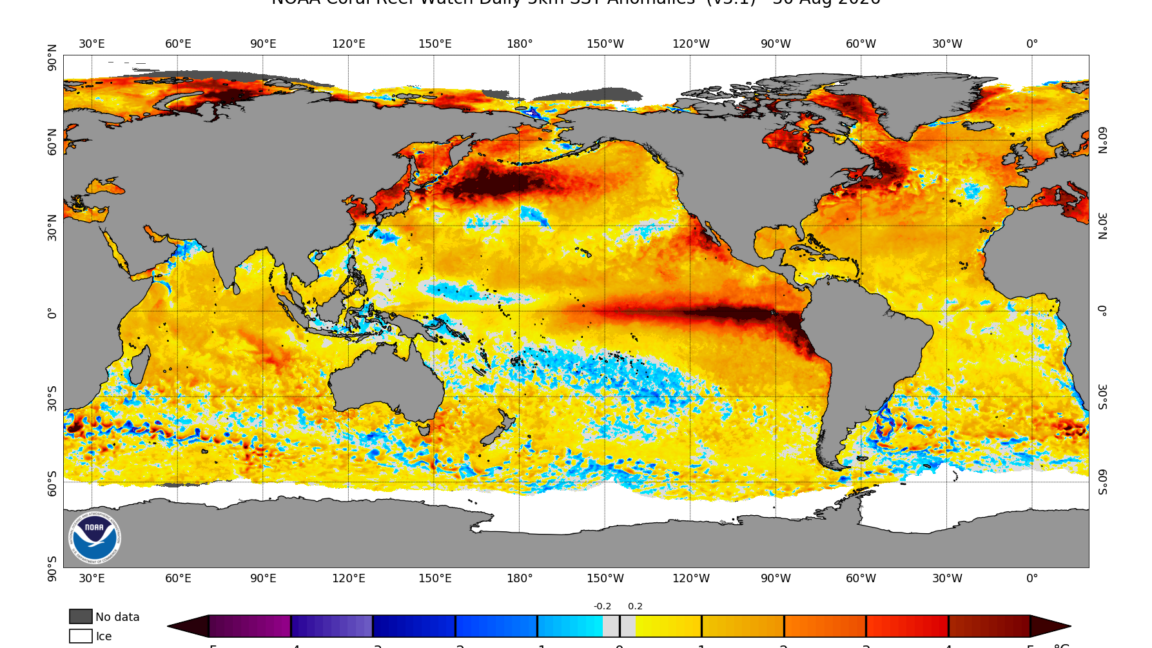
Every few years, El Niño or its cool counterpart, La Niña, shifts rainfall across the tropics, dries out Australia, floods parts of Peru, and rearranges the weather on most of the planet. The two are the warm and cold swings of a single system, the El Niño–Southern Oscillation, or ENSO, and that system is the largest source of year-to-year climate variation on Earth. Its swings sit atop the steadily rising temperatures driven by global warming.
But we didn't know whether global warming was making it stronger. It’s possible that the added energy in the atmosphere and oceans was causing its swings to be more dramatic.
“We've been seeing some very strong El Niño events in the late 20th and early 21st century, and what we didn't know was how unusual those are,” said Julie Cole, an environmental scientist at the University of Michigan. Because models disagree with one another and the instrumental data are too short to separate a trend, Cole’s team reconstructed a thousand-year-long ocean surface temperature record by analyzing fossilized Galápagos corals.
It turns out that El Niño in the eastern Pacific has never been as violent as it is now. “The events don't look anything like what we see in the pre-industrial era,” Cole said. “That was exciting. And a little surprising, actually.”
Limestone thermometer
The Galápagos sit in the bullseye of the eastern Pacific ENSO pattern, where the biggest events have their strongest impact. It is also one of the few options to look for fossilized corals in the region. “The Galápagos are located at 90 degrees west, and you have to go all the way to 160 degrees west to find another island in that near-equatorial zone,” Cole said.
Corals there grow one to two centimeters a year, laying down a calcium carbonate skeleton with a chemistry that depends on the water it formed in. In these skeletons, Cole and her colleagues looked at the strontium-to-calcium ratio and at different isotopes of oxygen because both track temperature. “As temperatures get warmer, we get less strontium in the coral,” Cole said. Sampling the extracted cores of fossilized corals millimeter by millimeter yields more than a dozen measurements per year—a monthly temperature log for the life of the coral colony.
Living colonies cover recent decades and can be checked against instrument data. The deeper history comes from dead coral heads, which can be dated using uranium-thorium methods to within a few years, even as far back as 500 years. “We were also able to find corals that are dead and washed up on the beach,” Cole said. “They may be 100 years old, 200 years old, or 900 years old, or even older.”
The result of sampling corals was a patchy but long temperature log—28 time-separated series from five islands, covering scattered years back to around 1100 CE. Set against that baseline, the last four decades look rather strange.
Modernized ENSO
Temperature variability since 1984 runs 36.5 percent higher than it was during the preindustrial stretch from 1000 to 1850 CE and is still 16.2 percent higher than during the period from 1851 to 1982. All three intervals are statistically distinct, and the trend only goes up. Those figures, Cole explained, mean that events that once ran a degree or two above normal in the Galápagos now run three or four.
The corals also record a shift in skewness—whether the swings were lopsided in the warm or cold direction. “The skewness turned positive,” Cole said, “and the positive skewness indicates that it's the warmer events that got stronger.”
The extra variability in our times is due to El Niño specifically. What’s more, nothing comparable shows up elsewhere in the record. Neither the Little Ice Age nor the Medieval warm period left such a distinct fingerprint on ENSO variability.
However, Cole and her colleagues did not yet have evidence clearly indicating that human activity was to blame. That came when scientists fed coral records into multiple climate models.
Beating the models at their own noise
ENSO fluctuates on its own; quiet decades are followed by wild ones, with no external push required. To understand whether the recent decades were really special or we just happened to catch the cycle in a more energetic period, the team had to find some point of reference for their findings. This proved tricky.
“We don't have a direct source of observational data to compare our records to in the eastern Pacific,” Cole said. “If we had another long record, we wouldn't be publishing this in Science.”
As a workaround, Cole and her colleagues used simulations in several climate models running through the conditions of the last millennium but incorporating only natural factors like volcanoes or solar variability—changes in greenhouse gas concentrations were left out. This allowed them to ask how often a climate untouched by any human impact produces a swing this large on its own.
“We tried to see if there was some evidence for this in climate models, and we found none,” Cole said. The actual increase retrieved from coral records sits outside the models' internal variability at a confidence level approaching 99 percent. The team interpreted this as evidence that what’s currently happening with ENSO would not be happening without us.
The picture in the central Pacific, though, is murkier. Line Islands corals show a similar mean increase but far wider scatter, which the researchers partly attribute to these records’ reliance on oxygen isotopes alone. Heavy El Niño rainfall there can account for half or more of the signal by changing the oxygen levels in water.
But an ambiguous central Pacific coral record is also what climate models predict. A forced, human-caused increase should appear first in the east. “The faster emergence in the eastern Pacific is exactly consistent with the models,” Cole said.
Crystal ball
Global warming is already expected to intensify ENSO's hydrological consequences, creating wetter wet phases and drier dry ones, regardless of ENSO-driven temperature swings. Even if El Niño's temperature swings stayed exactly the same magnitude, its floods and droughts would still get worse in a warmer world because the hotter atmosphere holds more water vapor.
But if ENSO temperature swings are strengthening too, the effects compound. What these compound effects are going to look like, however, is something corals can’t say. “We don't predict the future. We kind of have a crystal ball to look into the past—it's a little murky, but that's our corals,” Cole said.
The future, though, has already started happening since Cole’s study concluded. Two more strong El Niño events have arrived since the end of the team’s coral temperature logs, with another developing now that Cole (and most other experts) expects to break records. “It suggests that what we see is not a fluke,” she said, “but rather a new type of situation for El Niño, a new style of El Niño.”
While the nature of the change remains uncertain, Cole and her colleagues have little doubt about its root cause. “We are attributing that to warming, and we know what causes the warming, and it's our use of fossil fuels,” Cole said. “One more warning sign here of what we're facing in a warmer world.”
 Log in



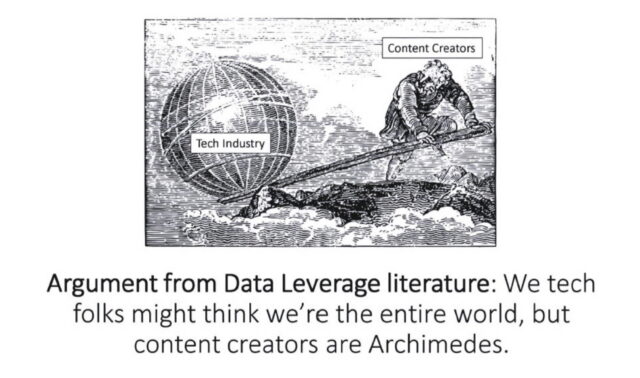 Cartoon in a Microsoft internal document.
Credit:
via News Plaintiffs
Cartoon in a Microsoft internal document.
Credit:
via News Plaintiffs

 reply
reply