Code Monger, cyclist, sim racer and driving enthusiast.
10349 stories
·
6 followers

Volkswagen Once Teased The World With An Amazing Mid-Engine Diesel Convertible Sports Car, Then Gave Up On It For A Logical Reason

1 Share

If you’re an American and you’re asked to picture a diesel car, you will probably imagine a Volkswagen, or maybe a Chevrolet, if you’re weird. For decades, Volkswagen was the king of diesel passenger cars in America, and sold everything from diesel-powered New Beetles to Touareg SUVs. Volkswagen once had the crazy idea to make what was essentially a VW version of the Toyota MR2, but with a frugal diesel engine. The BlueSport was once touted as the potential most frugal sports car of the modern era, but there was one problem, as Volkswagen discovered the one caveat about diesel sports cars.

The term “diesel sports car” sounds like an oxymoron, not unlike “diesel motorcycle.” In theory, the missions of diesel engines and sporty vehicles don’t complement each other. Typical modern diesel engines have mountains of torque, sure, but also have low redlines and are not exactly athletic. Most diesel engines aren’t particularly rev-happy, and unless you’re like me and love to wake up to the sounds of nature, Detroit Diesel edition, you probably aren’t going to care for the soundtrack. That doesn’t even get to other potential drawbacks, like how a diesel often weighs more than an equivalent gasoline engine.

Yet, despite all of this, more than one company has gone down the bold path of powering a fun vehicle with a diesel engine. I have written pretty extensively about the world’s several failed diesel motorcycle projects.  The sports car world has seen similar diesel oddities, and some have been dead ends, while others have been lucky enough to enter production. Last year, I wrote about the Trident Iceni, the absurd supercar with a heart that was a 6.6-liter Duramax V8 diesel truck engine tuned to 395 horsepower. The idea was, amazingly, that a diesel-powered supercar would help save the planet while still going 200 mph. But Trident never found enough money to actually put the thing into production, and it was entirely unclear if anyone even wanted a diesel supercar in the first place.

Trident Performance Vehicles

There are diesel sports cars that never reached production, like the Audi R8 V12 TDI and the Local Motors Rally Fighter diesel. Amazingly, some companies have put sporty diesels into production. There was an Audi TT TDI in Europe, as well as a Volkswagen Eos TDI. Mercedes-Benz, BMW, and Audi each punched out entire lines of diesels from convertible coupes to ridiculous SUVs.

Most sporty diesels have been sedans, wagons, and sometimes grand touring convertibles. What you won’t find is a diesel-powered two-seat roadster. Antti recently wrote about all of the weird convertibles that have come with diesels, and you’ll notice that none of them are roadsters like the Toyota MR2, the Mazda MX-5 Miata, or its contemporaries.

Volkswagen, once the company that sought world domination through diesel power, wanted to change that. The Volkswagen BlueSport was a sort of Miata for people who thought diesel was the answer to climate change. I have a feeling that if you’re guessing why this car was never put into production, whatever thought you have in your head is probably correct.

Volkswagen Bluesport Concept 2009 Hd D4b804191c79860eb43e1a30b14340068652ef43a
VW

That Brief Moment When The World Was Into Diesel

Let’s first set the stage.

Over in Europe, diesel used to rule the road. In 1990, just 10 percent of the new vehicles purchased in Europe were diesels. By 2011, a commanding 60 percent of all new cars sold in Europe had diesel engines. Some countries, like France, embraced diesel so hard that some 80 percent of new vehicles sold there were diesels.

Ford

Part of it was marketing. Automakers told the public and regulators that diesel was cleaner than gasoline. So you weren’t just getting great gas mileage, but you were doing good for the environment, too. Part of it was that, through the 2000s, diesel was much cheaper than gasoline in much of Europe, with gasoline sometimes averaging as high as 95 cents more expensive per gallon. European governments also began to see diesel as the future, and tried to expand diesel adoption with subsidies.

Eventually, this meant that diesel cars effectively became the default option in Europe, with gasoline instead being the rarer option. Diesel fever even reached America. In the 2000s, the promises of great fuel economy while saving the planet were too great for many consumers to ignore, and slowly, German diesels went from being a niche to practically mainstream. At the peak of the pre-Dieselgate era, about a quarter of Volkswagen of America’s sales were all diesels.

VW

The siren song of the diesel was so strong that, in the 2010s, General Motors got back into the diesel passenger car game in America. Meanwhile, Mazda tried to create the holy grail of diesels. BMW and Jaguar even started selling diesels in America.

With that context, it’s totally understandable that some automakers, often European ones, put out truly bizarre diesel concepts in the 2000s and 2010s. The world was obsessed with diesel, so it made sense. Volkswagen in particular was pretty silly with the concepts.

Volkswagen’s Mid-2000s Diesel Sports Car
VW

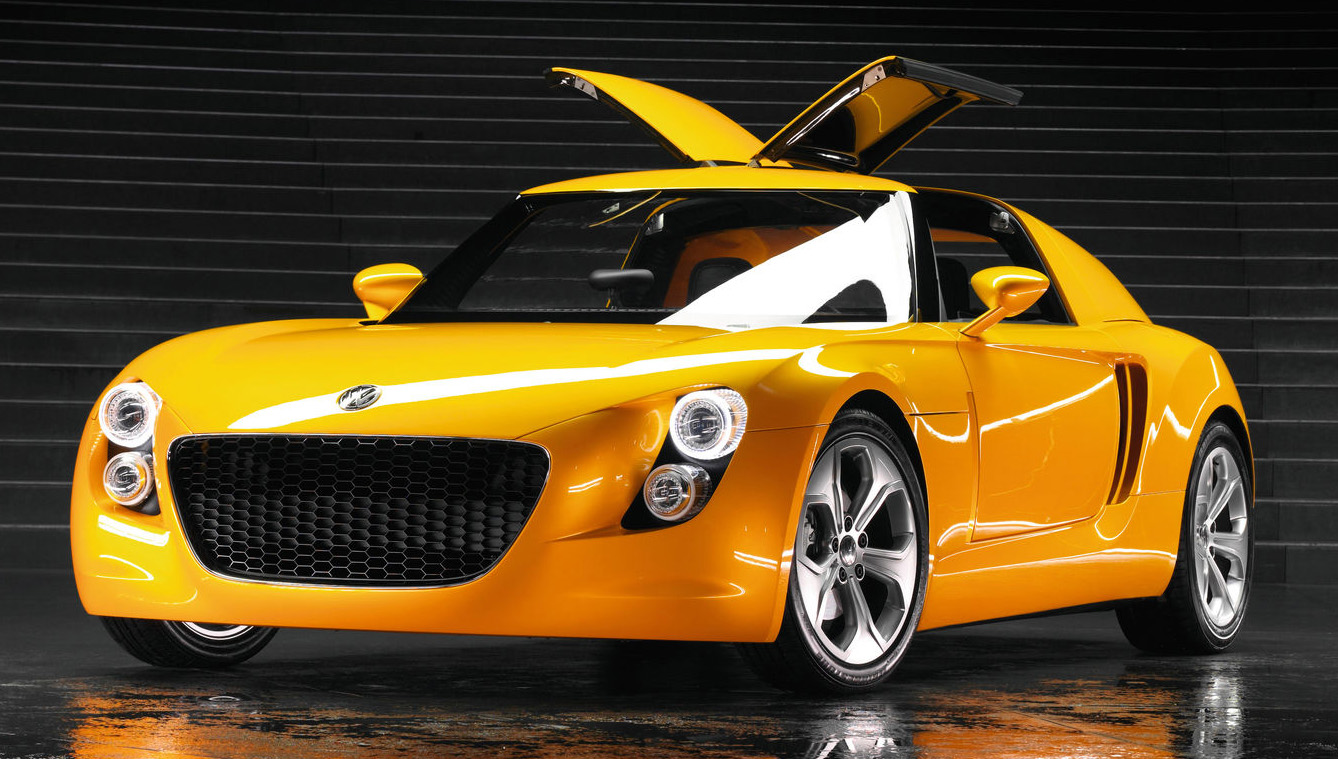
Earlier this year, Jason explained how, in 2005, Volkswagen teased a 70 mpg mid-engine diesel sports car:

The EcoRacer was very much a product of its particular time, which was 2005, a period when Volkswagen was heavily invested in diesel engines and eager to find ways to make diesels more exciting and appealing to mainstream car buyers, who often still felt diesels were slow, smoky things that were better suited to big rig trucks than passenger cars. Volkswagen was clearly willing to do a lot to make diesels drive better and be more fun and appealing, and as a result they took big swings like making fun diesel concept cars like the EcoRacer and, much more famously, designing elaborate software and hardware methods to cheat diesel emissions testing, which blew up spectacularly with the whole Dieselgate scandal that came to light around 2015.

The Dieselgate scandal cost Volkswagen plenty, both monetarily and reputation-wise, and also pretty effectively put an end to VW’s passenger car diesel plans, which meant that any fun diesel concept cars were dumped into that same coffin. But, before that happened, they did manage to do some fun diesel things, like this car, a mid-engined diesel sports car with modular, changeable bodywork.

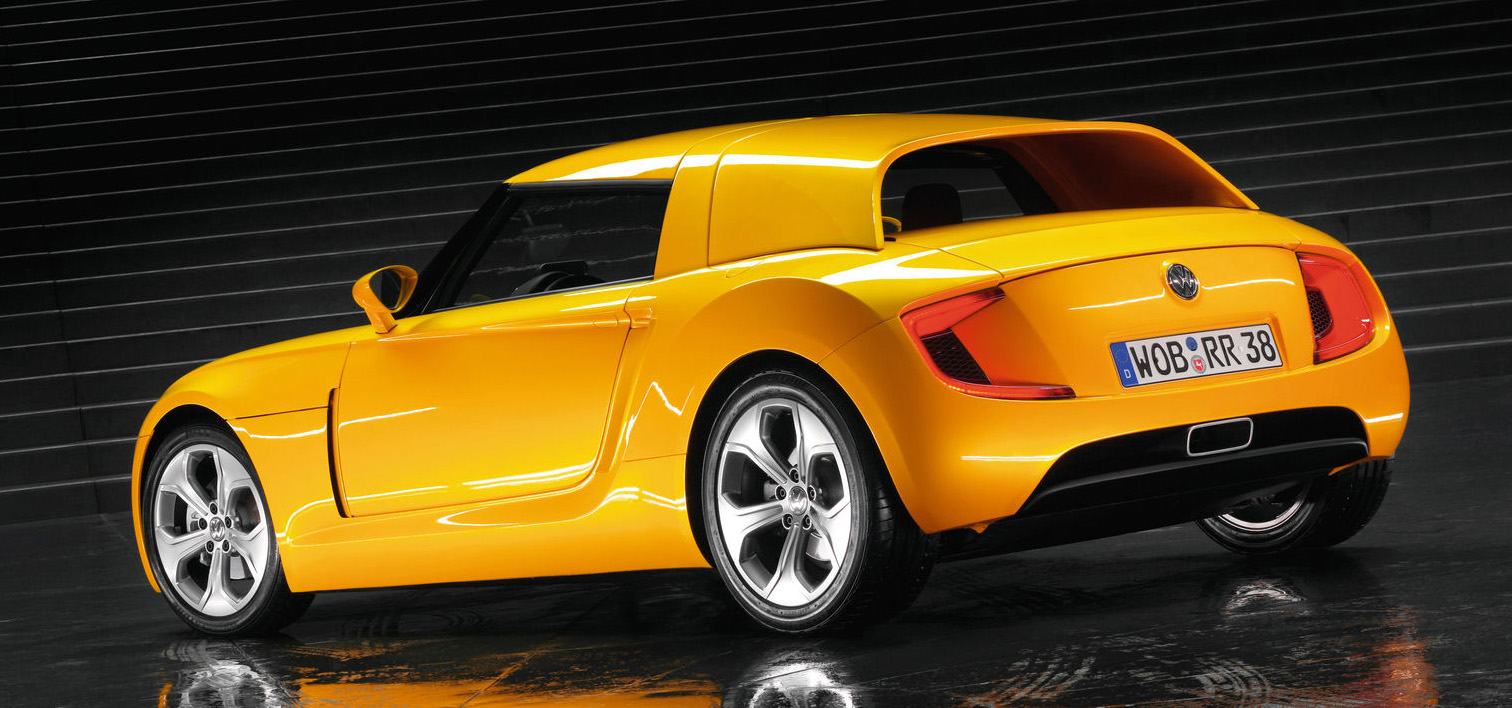
The EcoRacer, despite its somewhat dumb, first-thing-that-came-to-mind name, was an extremely cool and appealing little car. First publicly shown at the 2005 Tokyo Auto Show, the EcoRacer featured a 1.5-liter inline-four TDI engine making 136 horsepower – which sounds low today, but remember, this is a diesel – and 184 pound-feet (250 Nm) of torque at a pretty low 1900 RPM. It could get to 60 in a respectable 6.3 seconds and managed to do all this while getting 70 mpg! It used a seven-speed direct-shift (DSG) transmission and only weighed about 1875 pounds. It was a little mid-engined oil-burning rocket, and at the time it was suggested that Porsche was supporting the concept as a way to perhaps make a reborn VW-Porsche 914, though to be fair, I’ve only found one source that reported that, appealing an idea as it may be.
VW

The EcoRacer isn’t where the Volkswagen Group’s great diesel sports car plans ended. Earlier, I mentioned the Audi R8 V12 TDI and the Audi TT TDI. Audi also took diesel-powered racecars to some incredible wins. There were also a diesel Scirocco and Golf GTDs, but America wasn’t cool enough to get these.

The Volkswagen BlueSport

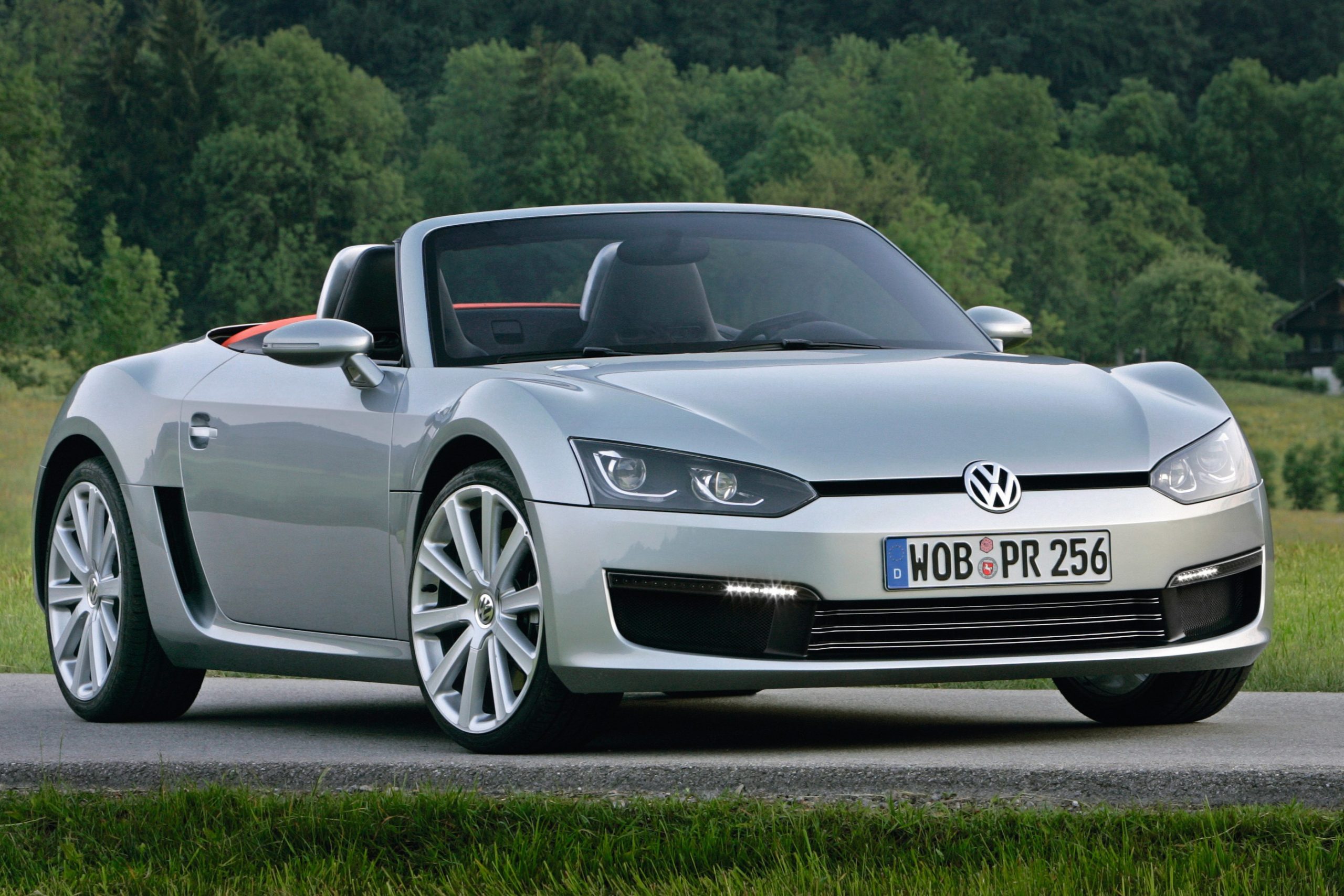
In January 2009, Volkswagen had a treat for the attendees of the Detroit Auto Show. On the floor was something stunning. Volkswagen returned to the idea of a diesel sports car, but instead of being a dorky little car like the EcoRacer, this car looked serious. The BlueSport, as Volkswagen called it, was Volkswagen’s answer to the lightweight roadsters of the day, but with a compression ignition twist.
Volkswagen Concept Bluesport
VW

Volkswagen says that the BlueSport was designed by a team led by Volkswagen Director of Design Klaus Bischoff and Director of the Design Centre in Potsdam, Thomas Ingenlath. The team’s goal was to pen a car that was equal parts elegant and sporty, with a “purposeful stance” and clean surfaces. Like many VAG vehicles at the time, the Concept BlueSport, as it was officially called, was finished in a metallic silver. To add some contrast, designers gave the vehicle an orange convertible top. A set of 19-inch wheels (with 235x35ZR19 tires up front and 245x35ZR19s in the rear) and LED lights complete the exterior.

Inside, splashes of orange and brightwork played against black seats and a black dashboard. The interior was rather minimalist, featuring a rotary dial shifter, a small infotainment screen, and three minimalist knobs for HVAC.

What made this car really special was what was underneath the skin. The BlueSport rode on a bespoke platform that featured a mid-rear-mounted 2.0-liter turbodiesel inline-four making 177 horsepower and 258 lb-ft of torque. This was coupled to a six-speed DSG that spun the rear wheels. Essentially, this was a front-drive powertrain shoved in the rear.

Volkswagen Bluesport Concept 2009 1280 69e1159875847bcb0eab5ee551b06f8bd5
VW

The drivetrain was lifted straight from a Golf, as were many other parts of the BlueSport. The car used the Polo’s front axle and suspension, the Golf’s multi-link rear suspension, and the R32’s brakes. The BlueSport was said to weigh 2,866 pounds, had a 45:55 weight distribution, and was about as wide as the era’s Golf while being shorter than an Audi TT. The convertible top weighed 60 pounds, and the car even sported two trunks. Four cubic feet of stuff fit up front with another 2.47 cubic feet in the back.

Volkswagen’s stated performance claims were pretty good. Supposedly, the BlueSport could rush to 62 mph in 6.2 seconds and race on to a top speed of 140 mph. While not the fastest thing out there, that’s pretty awesome for a diesel! The sweetener, of course, was that the “Clean Diesel” engine was good for up to 57 mpg in Eco mode.

When the car was unveiled in Detroit, Volkswagen was cautious not to promise anything. In talking to the New York Times, Volkswagen Group chief executive Dr. Martin Winterkorn said “the future of driving and the future of Volkswagen belong to a car like this,” before noting that the car was, for now, just a concept. However, at the same show, Volkswagen of America vice president for marketing and strategy Toscan Bennett said: “It could also be powered by a gasoline engine.”

Volkswagen Bluesport Concept 2009 Hd 9ebbb6b71c79b13005d4236fbfe3c18b781a1545d
VW

Ultimately, Volkswagen hinted at potential production by saying that if the public wants it, the BlueSport could be made.

As it turned out, journalists and the public alike couldn’t get enough of the BlueSport, and for some, the car was one of the highlights of the Detroit Auto Show that year. But then, things went quiet. The BlueSport disappeared, and nobody heard anything about it.

Volkswagen Got Serious

Volkswagen Concept Bluesport
VW

That was until May of 2009 when, as CarsGuide reported, Volkswagen officials said that, despite the Great Recession, the BlueSport could go into production. Volkswagen global production communications chief Christian Haacke said:

“The first challenge is to come up with a plan how to build the volumes required to earn money from such a car.” “The second challenge is to finish it and, as you can imagine in the current environment, this presents a problem.”

Reportedly, the concept car that appeared in Detroit was “almost-production-ready,” which explains why it looked like a production car already. The platform was rumored to be called MiMo (Mittelmotor), and as Australia’s Drive reported, the platform was also designed to underpin a pint-size Audi R4 sports car and an entry-level Porsche that was smaller than the Boxster.

Volkswagen Bluesport Concept 2009 Interior.3fbed9d2
VW

On paper, this made sense. Toyota and Subaru were working on the car that would become the Scion FRS and the Subaru BRZ. The Mazda MX-5 Miata remained the market’s benchmark. Even General Motors was still producing the Saturn Sky and Pontiac Solstice at the time.

Then, things started getting real when journalists got to take spins in the BlueSport in summer 2009. Germany’s Auto Bild noted that the concept felt surprisingly close to being production-ready. But, like any hand-built functional concept car, it had a few quirks, like a top speed of 59 mph and some squeaks and rattles. Auto Bild continues, roughly translated into English:

Right after the first few corners, you get butterflies in your stomach. Direct steering, a sharp surge of power from the rear, and a wind in your hair – it all feels so similar to the MX-5. And the MX-5 is a proven master of its craft. No other car is more successful. For 20 years, this purist driving machine has thrilled enthusiasts, and its production numbers are rapidly approaching the million mark in its fourth generation. That’s something that needs to be replicated. But how? Simply copy the winning formula? Engine in the front, rear-wheel drive – and there you have a classic British roadster. Objection! That would be a copy of a copy. After all, Mazda’s MX-5 was originally conceived as the retro version of the Lotus Elan . VW prefers an innovative yet historically inspired approach. The BlueSport is both a sports car and an eco-mobile. That’s why only economical yet powerful downsized turbo and diesel engines are planned as power sources.

Unlike the MX-5, the engines aren’t mounted longitudinally at the front, but transversely at the rear. For sticklers for terminology, it’s therefore not a roadster, but a spyder or speedster, like the Porsches of the 1950s. Be that as it may, the BlueSport is the first rear-wheel-drive VW since the Beetle era and is based on cost-effective, mass-produced technology. The engine and transmission behind the driver are sourced from the Golf parts bin, as is the multi-link rear suspension. The front axle comes from the Polo. A particularly defining feature of the BlueSport is its long wheelbase of 2.43 meters with an overall length of just 3.99 meters. This combination results in extremely short overhangs and a sporty appearance. For comparison, a Porsche Boxster is longer, has a shorter wheelbase, and therefore appears less compact. In this light, the BlueSport could also make sense as a new entry-level Porsche. To make the project profitable, an Audi Spyder and a Seat derivative are also planned.

VW designed the roof simply and effectively. Nothing expensive or rigid from the premium electric sector, but a simple fabric roof that, like in the MX-5, can be opened or closed in a flash by hand. That’s how a convertible roof should work. The Mazda can also set a similar standard with its gearbox and steering – it couldn’t be more direct and precise. The six-speed dual-clutch transmission in the VW prototype also performs well, but a cheaper and crisp manual transmission would be just as suitable for the production model. To demonstrate the BlueSport’s fuel-saving potential, VW has equipped it with a 180 hp two-liter TDI engine. From the rear, there’s a tremendous hissing, roaring, whistling, and clattering. It sounds more like a tractor than something to give you goosebumps. “Our acoustics engineers will improve that,” BlueSport developer Fabiano reassures us. Until then, the bright roar of the Mazda ‘s 160 naturally aspirated horsepower remains the benchmark.

Volkswagen Bluesport Concept 2009 Hd 33da3c281c79a0e2c4fc6bf1642e01d46640f845d
VW

This was also when Volkswagen started getting confident enough to talk numbers. The BlueSport was projected to come in at under €25,000, or cheaper than a Miata at the time. The BlueSport was even supposed to come to America.

So then, it seemed like Volkswagen was going to go through with it. After all, it sounded like engineers already did a ton of development work. Yet, the BlueSport never came. What happened?

Volkswagen Throws In The Towel

Volkswagen Bluesport Concept 2009 Hd 890cad2d1c7990b8af82149f07afb0333d351245e
VW

Progress on the vehicle was quiet. Audi teased the R5 e-tron concept in 2010, which supposedly was built on the same MiMo platform, but not much was said about the BlueSport. In January 2012, rumors spread across auto media that Volkswagen was going to kill the project. In March of that year, Dr. Hackenberg admitted that, despite his championing of the car since 2009, he couldn’t convince Volkswagen’s management that there was a business case. From Drive:

“[The VW Group] will have lots of convertibles in the future, a Golf convertible, Audi will have convertibles, but of a roadster … I’m working on it,” says Hackenberg. “I drove [the BlueSport] last summer … and the car is fantastic. But I don’t have agreement of the company [yet] that we will build it.”

Reportedly, there was some consideration that, maybe, Volkswagen could drop the planned Audi and Porsche variants and just go with the BlueSport. By 2012, Drive noted, Porsche had moved away from its strategy to make another entry-level car, so a Porsche BlueSport variant no longer fit, anyway.

Volkswagen Bluesport Concept 2009 Hd 036221c61c793a60d66a84c4204270657e2a8643a
VW

But then, there was a harsh reality that, according to Dr. Hackenberg, Volkswagen would have needed to sell 50,000 to 60,000 BlueSports to make the car worth it. This was a problem that the New York Times noted back in 2009. In 2008, Americans bought only 30,900 roadsters, with the sales largely evenly split between the Miata, Solstice, and Sky. Mazda moved just 6,739 Miatas in America in 2012. Sure, the BlueSport would have been sold in the global market, but Volkswagen would have had to work hard to sell 60,000 units over the car’s production run.

Sadly, by fall 2012, Volkswagen officially put the lid on the BlueSport, also shelving the Bulli van along with it. Why? The short answer was that, despite Dr. Hackenberg’s good fight, Volkswagen concluded that the future was in small crossovers, not sports cars. From Autocar:

“The segment is falling if anything,” said Hackenberg. “I don’t want to go to the board now with it as a rejection would kill it off completely. If we can make a business case for it, it can be put into production quite quickly. But if we make the proposal now, it dies.”

Volkswagen Bluesport Concept 2009 Hd 9113affe1c796e62c714e1bb3cabc1bd3b32b1471
VW

The Bulli, which was one of the many concepts that finally led to the ID. Buzz, was canceled for a similar reason. From Autocar: “It’s on ice,” said Hackenberg. “We didn’t find a market for it. There is no business case.”

Of course, Volkswagen would become embroiled in the Dieselgate scandal only a couple of years later. In the aftermath, Volkswagen made its hard pivot to EVs, ensuring that the BlueSport would never be built.

Was There A Market For A Diesel Roadster?

When you think about it, the BlueSport was probably doomed from the start. Two-seat roadsters were already a niche, and the Volkswagen BlueSport was essentially going to be a niche within a niche. It was smart for Volkswagen to raid its own parts bin to build the thing, but a sales floor of 60,000 units to make it worthwhile likely would have been hard to meet.

Volkswagen Bluesport Concept 2009 Hd 9d783cdf1c792eaf20867ae3f3d6f205dba1bc46f
VW

Volkswagen also had to ask itself just who wanted a car like this. Sure, car journalists and weirdos like me eat up silly diesels like catnip, but most other enthusiasts would just buy a Miata. Volkswagen might have sold dozens of BlueSports before Dieselgate hit.

But maybe I’m being pessimistic. In 2009, Volkswagen was on top of the world with its diesels, and there probably were some people who would have bought one of these thinking that they could get sports car fun and save the planet. It’s impossible to say what could have happened, but Volkswagen probably made the correct call here. The roadster market is tiny, and Mazda seems to run it. Not even General Motors unseated the king.

A part of me likes to imagine a future where this car went into production, anyway. The thought of hitting up California’s PCH with the top down and a 50 mpg diesel clattering behind my head is both funny and something I’d love to experience at least once in life. But like so many other concepts I’ve fallen in love with, I can only dream. Now, after reading this, maybe you will, too.

Top graphic image: Volkswagen

The post Volkswagen Once Teased The World With An Amazing Mid-Engine Diesel Convertible Sports Car, Then Gave Up On It For A Logical Reason appeared first on The Autopian.

Read the whole story
LeMadChef
31 minutes ago
reply
Denver, CO
Share this story
Delete

Microsoft blames failed server health checks—not hackers—for global outage

1 Comment

A global outage taking down a wide range of Microsoft 365 services remains ongoing Friday morning.

The outage started midday Thursday, impacting users of Microsoft email, cloud, and AI services. Microsoft has documented the full list of services impacted by the error, while moving early Friday morning to protect customers around the world from losing emails during the extended disruptions.

“Recovery actions are ongoing,” the Microsoft 365 Status account confirmed on X. “To help preserve delayed mail during this event, we’ve extended email timeout to 48 hours.”

Similar to recent world-shaking outages of widely used tech like Amazon Web Services and CrowdStrike, the Microsoft disruption looks like “one of the biggest outages of all time,” Ciaran Martin, the former head of the UK’s National Cyber Security Centre, told NBC News. Possibly even “worse,” he suggested.

Businesses, hospitals, police departments, and schools were among those scrambling to work around the outage. In Japan, it disrupted government IT infrastructure, according to deputy chief cabinet secretary Masanao Ozaki. NBC’s report documented various harms, noting that “few public bodies were immune from the outage.” In some cases, doctors couldn’t send patients “important” updates on medication changes or follow-up care.

The financial sector suffered, too, with people blocked from making bank transfers since they couldn’t receive verification codes.

Justice systems were also hobbled. The Supreme Court in the Philippines saw its legal work derailed, NBC reported. And one US sheriff’s office in Colorado reported that the outage made it difficult for people to post bond for prisoners’ immediate release.

It’s unclear how many users were affected, but Microsoft estimated in January that the total number of paid Microsoft 365 commercial subscriptions exceeded 450 million.

Microsoft blames failed server health checks

On a status page, Microsoft said “we have no evidence of malicious activity associated with this incident” and promised to “share a full Post-Incident Report with root cause and defense-in-depth actions after mitigation is complete.”

“We’re aggressively pursuing all pathways to reduce impact,” Microsoft said on X.

But Microsoft’s public statements make clear that the tech giant was blindsided by the outage and struggled for hours to find mitigations that could reliably restore user access.

Shortly after detecting the outage, Microsoft confirmed that the main issue was “a portion of infrastructure” that “is experiencing elevated load across multiple regions.” This was not caused by increased traffic, Microsoft said, but “a problem that's causing servers to fail automated health checks and become unavailable.”

Once it became clear that the failed health checks were to blame, Microsoft said it took steps to prevent additional server outages while validating alternate health check methods. But four hours later, the company admitted that it was still in the weeds.

“We’re opening all available pathways to restore service, as our actions taken thus far have not provided the anticipated relief,” Microsoft said. “We found a core process on affected servers is becoming overwhelmed, causing capacity loss. To validate a potential recovery, we're isolating a portion of infrastructure, restarting affected components, and reintroducing traffic to confirm the services remain stable before applying the change more broadly.”

Even small wins seemed to turn into new setbacks. As Microsoft worked to resolve the issue, some of the servers it brought back online would “become unresponsive again once they receive traffic,” giving the company yet another problem to solve.

Realizing that no quick solutions were coming, Microsoft moved to extend email timeout to 48 hours. As “encouraging” recovery efforts remained ongoing, Microsoft advised users that “some intermittent issues may continue” when traffic is restored.

Users upset by Copilot, Outlook issues

Microsoft’s most recent updates confirmed that it’s seeing “broader improvements in North America, sustained improvements across much of Europe, and encouraging recovery signals in Asia Pacific.”

“Some users may still experience intermittent access issues or delayed email delivery as mitigation continues across remaining affected infrastructure,” Microsoft said. “Our focus remains on stabilizing recovered infrastructure, completing mitigation in remaining impacted areas, and reducing delayed email queues and backlogs while we validate service consistency across connection methods.”

DownDetector, which tracks user reports of service issues globally, showed that connectivity losses peaked Thursday afternoon and dropped off substantially by Friday morning.

In comments, an Outlook user described the pains of monitoring email recovery, complaining that outgoing messages seem to send fine but incoming messages are received inconsistently. Some Copilot users seemed distressed that access wasn’t restored as quickly as Outlook. One Microsoft 365 user pondered, “How many offices had people with practically nothing to do? How much has this cost?”

Read full article

Comments


Read the whole story
LeMadChef
3 days ago
reply
Failed health checks? The jokes write themselves.
Denver, CO
Share this story
Delete

What must happen for AI’s trillion-dollar gamble to pay off | MIT Technology Review

1 Comment and 2 Shares

The results are eye-opening: The AI companies will need to increase their own productivity by a factor of 2.7 to break even by 2030, accounting for the cost of capital, a 15% return, and depreciation of the assets. Not impossible, says Wachter. The result would lead to the kind of economic growth that we saw during the US IT boom over a period of about 10 years starting in the mid-1990s. But, she says, for it to happen by 2030, “that’s a lot of growth compressed into a few years.” And if the hyperscalers cannot meet such profit goals?

“Then they will fall behind on their interest payments, and that risks bankruptcy,” says Wachter, who was previously the SEC’s chief economist and director of its division of economic and risk analysis. If a productivity boom “fails to materialize,” she and her coauthor conclude in their research paper, “the current buildout will be the largest misallocation of capital in history.”  

It doesn’t take superintelligence to realize that today’s large investments in the infrastructure for artificial intelligence come with huge risks. The hyperscalers will spend about $750 billion this year, building massive data centers scattered across the country. And the spending spree shows no signs of slowing. According to some projections, total AI capital investments from the hyperscaler companies—Alphabet, Microsoft, Amazon, Meta, and Oracle (which partners with OpenAI)—could be more than $5 trillion over the next four years.

It’s one of the largest capital investments by any industry in history. But there’s a problem that’s obvious to anyone paying attention.

While the hyperscalers plan to spend trillions, total AI revenues will be around $150 billion to $200 billion this year, says Gary Gensler, who ran the SEC during the Biden administration and is now a professor at MIT’s Sloan School. “The challenge is that the spending does not have commensurate revenues yet. That’s a fact,” he says. “And then the question is, is that an investment that will be paid off in the future?”

At stake in that trillion-dollar question is the financial health of the giant AI companies and the overall US economy—the investments could soon balloon to around 3% of GDP. The answer could also determine the fate of the hugely expensive data centers themselves. 

No one really knows how profitable and useful these multibillion-dollar behemoths will be down the road. Though AI models have made dazzling progress over the last few years, it’s anyone’s guess how much compute capacity we will need. The technology could become more efficient and therefore less dependent on raw computational power. Or demand for AI products could slow, or customers could turn to cheaper models.

The risks, both to investors and to the economy, have become even greater this year, as these AI companies have begun borrowing large amounts of money to build more and more data centers. Free cash flow—operating cash flow minus capital expenditures—is expected to soon dip into negative territory for the group. Even Alphabet, known for generating and hoarding huge amounts of cash, reports in the latest quarter that its impressive revenues of nearly $120 billion were devoured by AI infrastructure spending, leaving it with a free cash deficit of some $5.9 billion—its first shortfall since Google went public in 2004.

Read the whole story
LeMadChef
6 days ago
reply
And we (the US taxpayers) are going to bail them out and learn nothing from this experience.
Denver, CO
acdha
46 days ago
reply
Washington, DC
Share this story
Delete

US military "notionally interested" in satellite constellation around Moon

1 Comment

The US military has published a Request For Information on a federal procurement website signaling interest in deploying a "proliferated cislunar constellation" consisting of an unspecified number of satellites performing an undisclosed mission in the vicinity of the Moon.

The announcement follows statements in recent months from the Space Force's acquisitions chief for advanced programs, Maj. Gen. Stephen Purdy, that the military was getting serious about extending its reach to the Moon. The Space Force's most distant satellites today are in geostationary orbit, some 22,000 miles (36,000 kilometers) over the equator, collecting routine surveillance and missile warning data.

Most recently, Purdy spoke of a shift in Pentagon leadership's thinking about the Moon following an executive order signed by President Donald Trump last December. The order set out the Trump administration's space policy. One section of the order deals with the US government's ability to detect, characterize, and counter threats to US space interests from low-Earth orbit to cislunar space, the term of art for the region of space around the Moon.

Fighting for the Moon

"I’ve got the Secretary of War and the Chairman of the Joint Chiefs full on stating in public: 'This is a warfighting domain,'" Purdy said at Space Systems Command's Industry Days event in October, according to a report in Air & Space Forces Magazine. "And so, I would ask you all, please jump on my cislunar bandwagon because I need some more friends here, along with our deep, passionate crew that have been working on this for years."

Officials have emphasized the military's role at the Moon is to protect US interests there as the United States and China ramp up their lunar programs, with a series of robotic missions culminating in crewed lunar landings in the next few years. Some US officials foresee a competition for real estate and resources at the Moon, where there are a finite number of safe landing zones that can access the Moon's water ice at the south pole.

"We have a role to play, but we're not the lead," said Gen. Chance Saltzman, who was the top general in the Space Force until his retirement in August. "I just don’t want to get caught flat-footed when we start to have to protect US interests out there, so we’re along for the ride."

Now, the Pentagon has taken a preliminary step toward a "Cislunar Space System," a constellation of military satellites the military says it is considering deploying around the Moon. The new RFI was released by the Department of the Air Force and dated November 2. It asks companies to inform the military on their ability to provide "rapid" and "low-risk" solutions to support the government's "technical and programmatic objectives."

The document provided few details about what the Pentagon wants to do around the Moon with the Cislunar Space System, other than it will consist of up to five spacecraft, each with a government-provided payload, to meet military "mission needs" in late 2029.

The RFI hints at a vision for a much larger fleet of satellites in cislunar space. The first five satellites "may serve as seed vehicles that will inform the acquisition strategy for a potential future proliferated cislunar constellation," the RFI said.

"The government intends to award up to five firm fixed price preliminary design study contracts upon government consideration of the market information collected with this RFI and all other sources of information relevant to the effort," military officials wrote on the government procurement website.

Responses are due by November 24. It is not clear when the Pentagon might move forward with firm contracts, and the language in the RFI does not commit the military to doing so. The standard commercial satellite development cycle can run two or three years, so it's a safe bet that military officials would want deals signed sometime in 2027 to meet their 2029 schedule goal.

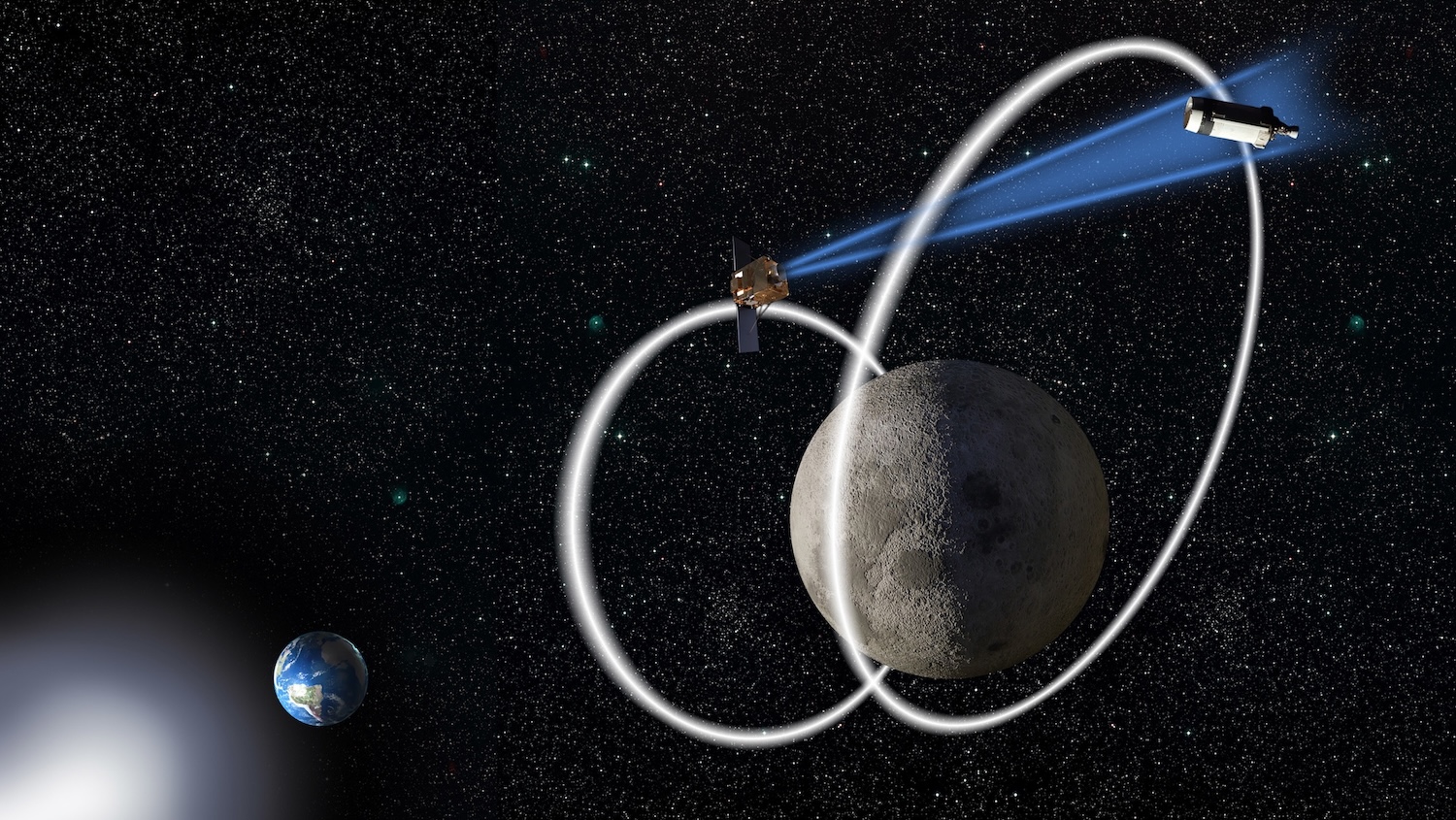
Artist's illustration of a cislunar space domain awareness mission. Credit: US Air Force

Some possible missions

The secretary of the Air Force announced in September that the US military has placed unspecified weapons in orbit. But don't expect the Space Force to send weapons to the Moon any time soon.

While NASA focuses its lunar program on human landings, a Moon Base, resource exploration, and scientific research, military satellites at the Moon could perform similar roles as they do in Earth orbit. These functions could include tracking and characterization of other objects in cislunar space, navigation and communications, and surveillance.

The Defense Department has already had a presence at the Moon. A joint NASA-DOD spacecraft named Clementine discovered the first hints of water ice inside permanently shadowed craters at the lunar south pole.

A military-led mission named Oracle-Mobility is scheduled to launch in mid-2027 on a trajectory toward the Moon. The $75 million Oracle-M mission, formerly known as the Defense Deep Space Sentinel, is led by the Air Force Research Laboratory, which says the satellite will be "highly mobile and will transit throughout cislunar space and experiment with techniques to maintain custody of objects in this region."

"This mission will allow AFRL to assess strengths and weaknesses of navigation techniques needed for future operational systems," AFRL says on its website.

A second Oracle mission, Oracle-Prime, is supposed to be ready for launch by the end of 2027. Its mission will involve detecting and tracking other satellites and debris from a position near Earth-Moon Lagrange Point 1, a gravitationally stable location about three-quarters of the way to the Moon.

Each of the Oracle missions will only involve a single spacecraft, but the recent RFI from the Department of the Air Force suggests a move toward a more sustained military presence around the Moon.

Read full article

Comments


Read the whole story
LeMadChef
7 days ago
reply
I'm more anti military than most, so grain if salt and all that.

Just fucking why do we need a military presence on the fucking moon?
Denver, CO
Share this story
Delete

Viral Video Of Ambulance Sideswiping Already-Crashed Police Car Should Make Everyone Feel Like Everything Is Going Fine, Just Fine

1 Share

Have you ever seen the film Koyaanisqatsi? It’s a 1992 experimental non-narrative arthouse film, and the title comes from a Hopi word that translates to something like “a world out of order” or, more literally, “chaotic life.” That’s sort of the feeling I get when I watch this viral video of a cop car and an ambulance from Cliffside Park, NJ.

I don’t necessarily think the world is completely out of order, but it’s definitely at least suggested by this strangely evocative short video. The video starts with a shot of the police Explorer well and truly crunched into a guardrail/signpost, and a delivery of the classic “you can’t park there, mate” joke. Objectively, the person shooting that video was as compelled to say that as they would be to say “that’s not going anywhere” after strapping something to the roof of a car.

The videographer is already enjoying the schadenfreude of the crashed cop car when the ambulance arrives, which leads to, well, I’ll just let you watch. Oh, I should note there are some uses of a word here that can be used as a slur, though in this context and with benefit of the doubt granted to the speaker, I don’t think that’s what’s intended here. Still, consider yourself warned. Okay, here you go:

Wow, right? The way those chips of the shattered taillight of the Explorer just come flying up like a bunch of Doritos flung out of a bowl is just sublime. And the sounds the ambulance makes as it scrapes along that cop car, and then the more crunching and scraping sounds it makes as it backs up in an attempt to extract itself all just add to the glorious sense of a situation that is deeply, richly boned.

Copambucrash Taillightchips

The narrator’s teasing demand for a field sobriety test at the beginning and the shrill and very understandable inquiry of “what the fuck is going on today?” just add to the perfection of this just-over-a-minute masterpiece of documentary reporting.

Local news reporting outlet and frequent monitor of police and emergency services in the Cliffside Park area, HRG News & Resources, contacted Cliffside Park Police, who confirmed that, happily, there were no serious injuries, and the whole thing was an accident, noting “that’s why they call them accidents,” though I’m not really sure that statement actually tells us that much at all.

I mean, I kind of gathered crashing a police SUV into a guardrail and then damaging it further by running an ambulance against it like a colossal cheese grater wasn’t a carefully planned operation. No shit it was an accident.

I think why the video seems to resonate with so many people is because it shows police and emergency responders as vulnerable and fallible as any of us, and there’s a certain strange freedom in the layers of fucking up demonstrated in the video, with emergency and official vehicles all participating in delivering a massive helping of clusterfudge on your plate, and everyone playing their part in this incredible dance that is a shitshow at the fuckfactory.

The natural state of everything is entropy, after all. Maybe there’s a relief, sometimes, in having bits of that revealed to us. And that’s what we find so amusing.

I’ll end this with the trailer for Koyaanisquatsi, because why not.

Top graphic images: Mr StivenR/YouTube


The post Viral Video Of Ambulance Sideswiping Already-Crashed Police Car Should Make Everyone Feel Like Everything Is Going Fine, Just Fine appeared first on The Autopian.

Read the whole story
LeMadChef
10 days ago
reply
Denver, CO
Share this story
Delete

Comcast loses more customers, claims other ISPs' cheap prices are "irrational"

1 Share

Comcast reportedly plans significant job cuts in its cable division as the firm continues to lose residential broadband and TV customers. Comcast lost 144,000 residential broadband customers in Q3 2026, up from a 91,000-customer loss in the same quarter a year ago, the company said in its earnings report today.

Comcast historically capitalized on a lack of competition for high-speed wired broadband. But now it faces stronger competition from fixed wireless providers and from fiber providers in parts of its cable territory.

"Fixed wireless remains aggressive and continues to take share, while fiber construction remains elevated, with pockets of irrational pricing and promotional activity," Comcast co-CEO Mike Cavanagh said today in an earnings call.

Comcast CFO Jason Armstrong said "irrational pricing" from fiber operators includes $30 to $40 monthly broadband offers "in specific markets in the third quarter." He said $30 to $40 pricing is irrational because deploying fiber costs $1,500 or more per home, and is "getting more expensive with construction costs up as you get into more suburban and rural areas."

"As we look at the return profile of that, to us, that is irrational competition," Armstrong said. While he didn't name any specific competitors, Verizon has been pitching FiOS fiber plans that start at $30 a month. Comcast's network is a mix of fiber and cable, and it offers fiber-to-the-home in only small portions of its cable territory.

Armstrong said more Comcast customers are leaving when they face "pricing transitions," apparently referring to the price hikes customers get when promotional offers expire. "We've been refining our offers and retention strategies to better manage these transitions and strengthen customer retention," he said.

Cavanagh said that "satellite is not yet a material factor" in the competition Comcast faces, but that Comcast is focused on "anticipating emerging forms of competition and positioning our business to respond as the market evolves."

Fewer jobs, more AI agents

After the latest quarterly drop, Comcast has 28.3 million residential broadband customers in the US. Comcast said it has a plan to turn things around.

"We've embarked on the most significant operating and cost transformation in our company's history, with an opportunity we believe will ultimately amount to billions of dollars over time," Cavanagh said. The organizational changes will result in a "significant charge" of over $1 billion to be applied in the fourth quarter earnings report, Armstrong said.

It appears likely that job cuts will affect Comcast's famously frustrating customer service division, replacing some number of humans with AI agents that already handle some customer interactions. "As personal AI agents reshape how consumers discover, purchase, and manage services, we're positioning Comcast to capitalize on that shift," Armstrong said.

As is typically the case when companies announce layoffs, Comcast said the goal is not merely reducing salary. Cavanagh said Comcast's plan "goes well beyond cost savings" and will "create a more agile, efficient organization that can compete more effectively and invest more decisively in growth."

Comcast lost 274,000 video customers in the quarter, up from a 257,000-customer loss in the same quarter last year. Total video customers are down to 10.4 million. Comcast added 368,000 wireless lines, down from a 414,000-line gain last year. It now has 10.6 million wireless lines in its business of offering mobile service to broadband subscribers.

Job cuts target cable division

Bloomberg reported yesterday that "Comcast is planning a significant number of job cuts as part of an overall restructuring of its cable-TV, broadband and wireless businesses." A Variety report today said the number of job cuts isn't yet determined but that "the layoffs are expected to affect the Comcast Cable side of the business, not NBCU divisions," referring to Comcast's NBCUniversal subsidiary. Comcast did not provide any specifics on job-cut plans when contacted by Ars today.

Comcast also plans to split itself into two publicly traded companies through a spinoff of NBCUniversal and Sky. The spinoff plan was announced in June and is expected to be completed in mid-2027. Comcast's company-wide revenue was $29.3 billion in the third quarter, down from $31.2 billion the previous year. Net income rose from $3.33 billion to $3.45 billion.

Comcast's stock price increased today after beating analyst expectations for its overall earnings, which included a profit from its Peacock streaming service. But it lost more broadband customers than expected and gained fewer wireless lines than expected.

"Comcast’s connectivity-and-platforms revenue fell 2.6 percent in constant currency in the third quarter, to $19.66 billion," The Wall Street Journal wrote. "That was a steeper loss than what Wall Street had expected. The company also added fewer domestic wireless lines than it did a year earlier, missing analyst estimates."

Comcast's total broadband subscribers rose every quarter for 20 years until it reported a net loss of 10,000 residential broadband customers in Q2 2022. In Q1 2025, a net loss of 183,000 residential broadband customers caused Cavanagh to bemoan that the company isn’t “winning in the marketplace."

Comcast tried to turn things around by providing unlimited data on plans that previously had monthly data caps and by offering a five-year price guarantee. Its five-year price guarantee plans start at $45 a month before taxes and fees. Customer losses continued despite those changes.

Free wireless lines and AI customer service

Comcast provides free wireless lines for a year to its broadband customers, but said this is not an irrational offer. "When we offer a free wireless line, it is against zero capital deployed," Armstrong said, noting that Comcast resells mobile capacity instead of building its own cellular network. "We don't have spectrum. We don't have towers. Our model is an MVNO [Mobile Virtual Network Operator] model."

Obtaining mobile capacity through Comcast's MVNO agreement with Verizon isn't free, of course. But Armstrong said Comcast customers who receive a free wireless line for a year "are converting into paying subscribers within a year to a very rational price point, we think, and our goal is obviously to upsell them over time."

The price of a basic Comcast mobile line goes from free to $30 a month after one year and requires a bundle with Comcast home Internet. Armstrong said Comcast is "converting 70 percent of those free lines into paying relationships."

Armstrong also discussed Comcast's plan to increase use of AI agents to interact with customers. It's up to customers to determine whether this improves service or makes things worse, but it will apparently be cheaper for Comcast.

"AI is already embedded across our network to optimize performance, and we're expanding its application across customer experience through partnerships with Sierra and Cresta," Armstrong said. "These capabilities are central to our new operating model, enabling us to bring products to market faster, simplifying customer interactions, and deliver a better experience more efficiently. We've already reduced customer service contact rates by roughly 20 percent and eliminated more than 30 million service interactions year-to-date versus the prior year."

Read full article

Comments


Read the whole story
LeMadChef
10 days ago
reply
Denver, CO
Share this story
Delete
Next Page of Stories